
Dick McBride, poet, novelist, playright and bookseller.
to
Dick McBride was a poet of the Beat Generation who acted as a literary bridge between the United States and Britain, bringing the writings and spirit of the Beats to this country. In books and in performances of his own works and those of fellow writers, he sought to broaden awareness of the poets who had made such an impact on American writing.
Contents:
Early years & 1950s
Richard William McBride, son of John Graham and Marie Jones McBride, was born in Washington, Indiana on 8 May 1928. He grew up in Indiana and Illinois during the Great Depression with his brothers, John, Robert, Tom and Joe.
In high school, Dick was active in dramatics and was in productions of Hobgoblin House, Brother Goose, George Washington Slept Here and Sparkin'. He subsequently attended the Radio Drama Workshop in Milwaukee for seven months and was involved with the Little Theatre of Milwaukee, appearing in productions of Tattercoats and the Black Prince and The Long Christmas Dinner.
He studied at Paducah Junior College before transferring to Eastern Illinois State College. During his time at Eastern, he was a member of The Players of Eastern Illinois State College, appearing in productions of Arsenic and Old Lace, The Doctor in Spite of Himself, The Heiress and Sorry, Wrong Number.
While studying, he worked as a scriptwriter and radio announcer for radio stations in Kentucky, Paducah and Illinois.
In the early 50s, Dick's older brother, Robert, encouraged him to move to San Francisco and concentrate on his writing. Dick and his partner, Betty Kostal, moved in with Robert and Martin Broadley at their apartment at 29-B August Alley, between Green and Union. Dick and Betty lived there until they married and their first son, Sean, was born in 1953.
During these early years, Dick was active in the local theatre scene and was a member of Monty Ash's Theater San Francisco. He wrote several plays, including From Out the Whale's Mouth, Devils in a Quandary, Four and an Old Woman, A Miracle for Christ and An Unnecessary Miracle.
Building on his work with Theater San Francisco, Dick saw three of his plays (From Out the Whale's Mouth, Devils in a Quandary, and Four and an Old Woman) staged in succession at the Crossroads Theatre between July and September in 1952. From Out the Whale's Mouth, a modern take on the biblical story of Jonah, received positive reviews from both the San Francisco Chronicle and San Francisco News, and Dick was interviewed on local television.
Dick McBride's three-act poetic drama,
From Out the Whale's Mouth,is a prodigious work coming from any one, much less so young a man.This San Franciscan, transplanted from Washington, Ind., has a faculty and feeling for words that would do justice to any of our top play-wrights today. It is poetry.
At the same time, Dick worked as a book clerk in the San Francisco branch of Brentano's, a day job that kept him close to literature as he continued to write and stage his plays. He eventually lost the job, but remained devoted to his writing.
The following year, he was employed at the Paul Elder & Company bookstore at Sutter and Stockton. It was here that Dick first met Kenneth Patchen while building a window display to promote one of Patchen's books – possibly Fables and Other Little Tales (John Williams, 1953) or The Famous Boating Party (New Directions, 1954).
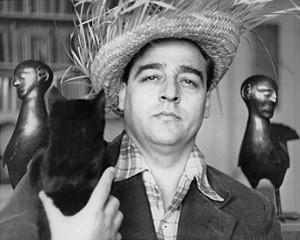
Kenneth Patchen had moved to 377 Green Street, North Beach in 1951 and hosted poetry readings at his apartment with his wife, Miriam, which Dick attended.
The first man who gave me any kind of modern lit guidance (another world of Giono, Celine, Silone, Proust, Nathanael West, even Saroyan and [surprise] Herman Melville…) was Kenneth Patchen and I probably owe him more than I realize.
In June and July, Dick appeared in Theater San Francisco's production of High Sinners, Low Angels, a musical comedy verse play by James Schevill. At the time, Schevill was a professor at the California College of Arts and Crafts in Oakland. He later worked at San Francisco State University and was a key figure in the Actor's Workshop, who produced his first play, The Bloody Tenet. Schevill also served as the director of The Poetry Center at SFSU from 1961 to 1968. During his tenure, he played a central role in the San Francisco Poetry Renaissance.
On Friday and Saturday evenings throughout August, Theater San Francisco staged A Miracle for Christ, a three-act play in free verse dramatizing the raising of Lazarus of Bethany from the dead, at the Crossroads Theatre under the direction of his brother, Robert, who also starred as Lazarus.
In 1954, Herbert Blau, the American director and co-founder of the Actor's Workshop, briefly considered staging a regular production of From Out the Whale's Mouth. The play also won second honors in the Stanford Dramatists' Alliance competition for the Maxwell Anderson Award for poetic drama.
That same year, Dick was fired from Paul Elder's and briefly worked for Metro-Goldwyn-Mayer in their northern California business office as a file clerk. He lost this job too for refusing to join the union. Newly married and a young father, Dick needed to find work. Kenneth Patchen suggested that he apply for a job at City Lights Books and introduced him to Lawrence Ferlinghetti.
In The Beat Goes On (The Idler, 2001), Dick explains how he ended up working at City Lights:
I first noticed City Lights around 1954 when I was working in Paul Elder's bookshop, downtown San Francisco. Walking back to North Beach along Stockton Street [sic], I noticed a dirty window in a tiny shop just across the alley from Vesuvio's, where I sometimes stopped for a drink before going home. The shop had been there all the time, but I had never paid much attention to it. Yet on this nearly forgotten afternoon there was a difference that caught my eye: perched on the ledge inside the Stockton street [sic] window was a single rose in a jam jar and possibly a bowler hat (unless this is a Magritte-inspired memory vision), but definitely inside the dilapidated space were several boxes of books. Then I forgot about it for a while, even after City Lights opened for business. I suppose I must have gone inside a couple of times and possibly even bought a book.
Then I met the poet and master magician, Kenneth Patchen, while I was working at Paul Elder's, building a window display for one of his books. Time passes and I lost my job in the bookstore, soon after finding employment with MGM (in their business office for northern California). It was the closest I've come to working in the movies, and all I did was stick stamps on letters and file invoices. I lost this job too – for not joining the union – and once again I thought I was desperate. Three out of three since arriving in San Francisco; not bad, eh?
Patchen stepped in and suggested I apply for a job at City Lights, giving me an introduction to Lawrence Ferlinghetti. An interview of sorts followed – Lawrence and I talked about books and writing (his and mine) – and I was hired even though Lawrence obviously knew I had been fired from both Brentano's and Paul Elder's.
Dick worked at City Lights from 1954 until 1969. During this time, he became friends and poet-in-arms with Ferlinghetti, Allen Ginsberg, Richard Brautigan, and other poets, writers and artists of the San Francisco Renaissance and Beat Generation.
He initially worked behind the counter at the front desk and eventually took on more responsibilities, managing the bookstore alongside Ferlinghetti, Shigeyoshi Murao, and his brother, Robert.
A book-clerk I know from long personal experience, is a human Mexican jumping-bean who is both generally underpaid (no offense, Lawrence – we know you're not a supply-sider...) and more knowledgeable than the combination of authors, psychotics, managers, shoplifters, and customers who share his presence in a store during the course of a working-day. He must know books; he must know math, he must be honest; he must be fast; he must use deodorant; he must be pleasant; he must be cool; he must be witty – in short, he must be the all-around hipster. To have satisfied Lawrence, Dick McBride must meet all these qualifications.
In May 1955, Dick played Sante, the butler, in a silent role for the Golden Gate Opera Workshop's production of Suzanne's Secret, a comic opera by Ermanno Wolf-Ferrari, held at the Central YMCA auditorium.
In 1956, Kenneth and Miriam Patchen moved from North Beach to Palo Alto, and Dick and his family moved into their top-floor apartment at 377 Green Street, three blocks away from City Lights.
...when the Patchens had moved in the apartment was in terrible shape – big holes in the walls, which Kenneth covered with his paintings, gluing them to the walls so they couldn't be removed without causing even more damage. We probably had more original Patchens on our walls than anyone in town.
During his early years at City Lights, Dick assisted Ferlinghetti in the preparation of Selections from Paroles, a collection of his translations of the poetry of Jacques Prévert.
Prévert was an important influence on Ferlinghetti. Ferlinghetti had sent several of his early translations to Peter D. Martin, and five of them were published in City Lights magazine before they met.
In Ferlinghetti, A Biography (Doubleday, 1979), Neeli Cherkovski explains that Paroles ...was the result of careful planning. The book included the poems that had appeared in City Lights magazine and some that had never been published. This was the first extensive selection of the French poet’s writings in English.
Ferlinghetti had been working on his translations of Jacques Prévert for several years, and Paroles wasn't published until he received permission from the French publisher, Gallimard, and agreement from Jacques Prévert.
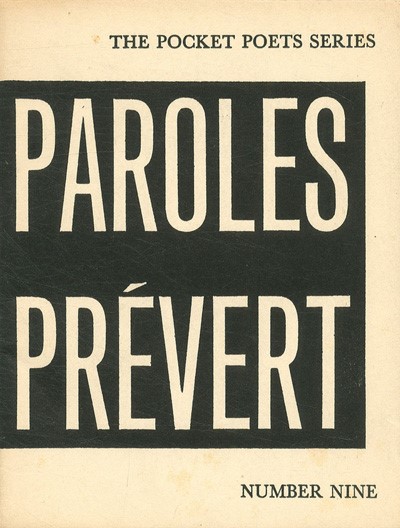
Selections from Paroles, the ninth book in the City Lights Pocket Poets Series, was published by City Lights Books in 1958. Below his translator's note, Ferlinghetti thanks several people, including the poet and translator Marie Ponsot (whose first book of poetry, True Minds, was number five in the Pocket Poets Series), the sculptor Henri Marie-Rose, and Dick for their ...aid and information in the preparation of this volume.
Am in jail on account of HOWL. HOWL seized by SF Police and me and Shig with it. Obscene, dad.
In 1957, the year of the Howl obscenity trial, Dick moved to Hastings, Nebraska, with his family to finish college and received his BA degree in Speech and English from Hastings College in 1958.
During this time, he worked forty-eight hours a week as a scriptwriter and radio announcer for KHAS, and wrote when he could buy a few precious hours.
One of his poems was published in New Voices, the campus literary magazine, in 1957. In May, he was presented with a $25 prize by the Hastings Kiwanis Club for the poem and was awarded a prize for top manuscript in the "New Voices" contest by Professor Lawrence R. Holmes, associate professor of English, and the publisher and editor of Poetry Public, an informal publication of poetry and poetry criticism.
Between November 1957 and late January 1958, nineteen-year-old Charles Starkweather and his fourteen-year-old girlfriend, Caril Ann Fugate, embarked on an eight-day killing spree in Nebraska and Wyoming that claimed the lives of eleven victims. Starkweather was executed by electric chair in Nebraska in June 1959.
The events provided the inspiration for Ballad of Blood (An Impression of the Charles Starkweather Murders), the opening poem from his second collection of poetry, Ballads of Blood (Golden Mountain Press, 1961), and Cwazy Man, a short story published in Panurge New Fiction in 1994.
In April 1958, the Penguin Club, Hastings College's literary group, hosted a play reading and discussion of Dick's play, There and Where.
There and Where is a two act play dealing with a man's pursuit of his dream: To have the time to write a poem. For Owen Blank, salesman, to have the time to write means that he must sell an idea to the company. The audience is taken through two days of Blank's life as he attempts to sell the idea. The play has many statements of social criticism worked into the dialogue.
The following month, he participated in a prose and poetry recital at the Little Theater of McCormick Hall, a historic building on the college campus. The Little Theater occupied a large room on the second floor that had originally housed the college chapel.
He remained in regular contact with Lawrence and Kirby Ferlinghetti and supplied City Lights with copies of Lawrence Holmes' magazine, Poetry Public, as well as PS: Poems and Stories, a magazine published by Alan Swallow.
In June, Lawrence and Kirby wrote to Dick to congratulate him on his recent letter to Dr. Frank S. Hewitt, head of the English department at Hastings College, who had taken issue with a poem a female student had published in New Voices. They thought Dick had defended a very good poem, and Lawrence wanted to write to the head of English to ask to be put in touch with the author, as he was keen to read more of their poetry. He agreed to sell copies of the magazine at City Lights and suggested Dick stamp "CENSORED IN HASTINGS" across the front cover.
Later that year, while Dick was in Nebraska, Ferlinghetti discovered a large basement that had been used to store Chinatown's ceremonial Chinese dragon (immortalised in his poem, The Great Chinese Dragon). Some decades earlier, it had also been used as a religious meeting place.
The basement resembles a quaint catacomb with monastic brick arches extending under the sidewalk. The walls are decorated with heavily lettered religious phrases.
If ye believe not that I am He, ye shall die in your sins.Remember Lot's wife.I and My Father are One.And on a door leading to a neighboring basement stands the simple but rather redundant statement:I Am The Door.
With Gary Snyder's help, Ferlinghetti cleared out the basement (leaving the biblical quotations in situ) and used the space to accommodate most of the book stock. The basement also housed a small "office" under the stairs and the poetry alcove.
Following the publicity of the Howl obscenity trial and the subsequent success of Howl and Other Poems, City Lights had grown as a bookstore and publisher. Shig was appointed manager, and Dick's brother, Robert, who had been business manager at City Lights since 1955 and had been running the bookstore with Shig while Dick was in Nebraska, was placed in charge of the shipping and mail order department.
City Lights had become a San Francisco literary institution, and there were now nine titles in the City Lights Pocket Poets Series. Towards the end of the year, Ferlinghetti tasked Brady Harris and Malcolm Whyte of Troubador Press with printing a new edition of Howl in order to meet the rising demand and to restore the full text as it appeared in Allen Ginsberg's original manuscript – a painstaking process which would take several months to complete.

In February 1959, Dick and his family moved back to the West Coast. After spending a couple of months in Pacific Grove, where Dick had planned to open his own bookshop, they eventually returned to San Francisco in April.
Ferlinghetti rehired Dick to help manage the growth of City Lights and the publishing operation with Robert. Dick remained involved in the day-to-day running of the bookstore alongside Shig and assisted Robert with the business side of things, including the circulation of City Lights titles. He occasionally worked as an editorial assistant and helped Ferlinghetti develop the City Lights Pocket Poets Series.
He also managed the poetry alcove in the newly opened basement – a section dedicated to work by San Francisco poets, little presses, literary magazines, and poetry. It was here that he met many of the poets and writers that he would later represent in England.
City Lights was my home; the customers, employees, visiting writers and assorted gurus and, of course, curious tourists were my friends and relatives.

During this time, he lived at Mason Street, North Beach, and threw himself into his writing.
In May, his controversial poem St. Francis (Random thoughts of a Protestant Cop) was published in the second issue of Beatitude, a mimeographed magazine conceived by Allen Ginsberg, John Kelly, Bob Kaufman and William J. Margolis as a weekly miscellany of poetry and other jazz designed to extol beauty and promote the beatific life among the various mendicants, neo-existentialists, christs, poets, painters, musicians and other inhabitants and observers of North Beach, San Francisco, United States of America.
St. Francis (Random thoughts of a Protestant Cop) was written in response to Hello, St. Francis by William J. Margolis, which appeared on the cover of the first issue of Beatitude, at a time of increasing tensions between the North Beach community and the San Francisco Police Department.
Possibly inspired by Ferlinghetti's Sometime During Eternity from A Coney Island of The Mind (New Directions, 1958), Hello, St. Francis is written from the point of view of a North Beach bohemian. St. Francis (Random thoughts of a Protestant Cop), on the other hand, is written from the perspective of a bigoted San Francisco police officer meditating on the city's namesake.
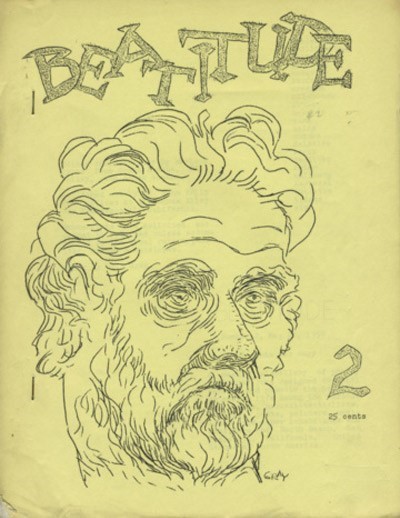
Dick contributed at least a further seventeen poems to Beatitude, including Weeping of the Sun, San Francisco Saturday Scene, Little Bells and Pretty Snow, Now King Come Down From, O Epileptic Boy, Epileptic Boy, World Down Like Dung, There Was This House, How Many Big Things, Specter / August Six, Stones, San Francisco: One Way of Doing It, The Village of Man-Eating Wives, Deathman, Town Surrounded by Nothing, Man Mad At Poets and Man Mad at Poets, No.3.
I will never forget the excitement generated by the Bread and Wine Mission when it first began putting out Beatitude. The first editions were run off on an old mimeograph machine, collated and then bound with a staple gun. Hot off the press! Pierre de Lattre and his disciples used to run down the hill to City Lights with the latest edition, dropping off bundles along the way for footsore, wandering poets to hawk on North Beach streetcorners, while keeping a look-out for Bigarani, the Beat-hating cop.
In autumn, Brady Harris collected a marked-up 'censored' edition of Howl from City Lights along with a note from Ferlinghetti to print 5000 copies of the revised edition. Harris and Whyte began the meticulous process of restoring the ellipsed 'dirty words', and in November, City Lights launched the post-trial edition of Howl.
Perhaps to avoid stirring up controversy again, Ferlinghetti’s subtle phrase concluding the back-cover copy simply stated: “[T]he present printing contains the full text, exactly as it appeared in the original manuscript.” Without notice from the press, or a peep of protest from the police regarding the changes, HOWL went on to sell more than a million copies in two dozen languages. Its penetrating vision quickened a movement for social reform and made it one of the most widely read books of poetry of its time.
In the same month, Specter / August Six was featured as the opening poem in Beatitude #11 and was also referenced in the cover art by Barbara Newcomb. The three-and-a-half-page poem describes Dick's awkward participation in the last leg of a peace march to commemorate the 14th anniversary of the atomic bombing of Hiroshima.

In August, nine students walked sixty miles from San Jose State College to San Francisco to highlight Hiroshima Day. For the last stretch of the march from Daly City to Union Square on 6 August, around twenty to thirty sympathisers, including members of Berkeley's Acts for Peace movement, joined the march at Mission Street and Hillcrest Avenue. As they walked down Mission Street to Union Square, they handed out pamphlets that demanded an end to nuclear tests and the arms race. Their goal was to awaken all responsible citizens to the danger of nuclear war.
When they arrived at Union Square, where Dick left the march and joined ...two / Anarchistic bookshop / Owners
and A breathless young minister / Who almost arrived too / Late,
the marchers were met with apathy and indifference despite the presence of TV cameramen, photographers and reporters.
The only official to greet them was Father Pierre Delattre of the Bread and Wine Mission in North Beach, who praised the 'Peace Marchers' for their principles and told them When a man knows something is wrong, he has an obligation to refuse to go along, even though he has no alternative to offer.
After the event, Ferlinghetti displayed a selection of the marchers' placards outside City Lights. Some of the placards were illustrated with paintings of mushroom clouds and featured political slogans, including Our American Heritage?
and HIROSHIMA MURDER EN MASSE
.
A slightly different version of Specter / August Six (one of the anarchist bookshop owners is named as Ferlinghetti) was subsequently published in Dick's third novel, Memoirs of a Natural-Born Expatriate (Alan Swallow, 1966), where it spans an entire chapter.
In later years, Dick would recall that he read Specter / August Six ...with an almost religious fervour.
Once at a party, when we lived in an Italian bottom flat on Mason Street, prompted by Jim Larkin, I put a lampshade on my head and read the poem. Jim and I were in tears by the time I shouted my last hosanna, and the others were silent for a while. Ferlinghetti, wearing his most sagacious face, was trying to think of some way to put the poem down. I think Kirby, embarrassed by the silence, felt like she had to say something. What she finally said was:
Why, it sounds just like an early Ferlinghetti!
1960s

On 12, 13, 19 and 20 February 1960, Dick’s play, There And Where, a two-act play about a man's pursuit of his dream to have the time to write a poem, was staged by the TEL-HI Drama Group at the Telegraph Hill Neighborhood Center, San Francisco. It was double-billed with Sweeney in the Trees by William Saroyan.
There and Where was directed by Dick with assistance from Robert. Dick starred as the protagonist, Mr. Owen Blank, and the supporting characters were Al Wendl, Alice Fontenot, Clara Chapala and Robert Jourdan.
The director of Sweeney in the Trees was Olive Thurman Wong, daughter of civil rights leader Howard Thurman. Betty was responsible for the music, and the choreographer was Klarna Pinska.
The production manager and lighting engineer for both plays was the artist, journalist, and actor Victor Wong, fictionalised as Arthur Ma in Jack Kerouac's 1962 novel, Big Sur. Wong also played Perez, one half of a dance team, in Sweeney in the Trees.
The set and costume design was by North Beach artist Nobuo Kitagaki. C. V. J. Anderson (editor of Beatitude and The Underhound and co-founder of The Communication Company, the publishing arm of The Diggers) and Karl Herreshoff provided the music.
Dick's first collection of poetry, Oranges, was published soon after by the printmaker, painter, and craftsman Wilder Bentley at the Bread & Wine Press in San Francisco. It was illustrated with woodcuts by his friend, Victor Wong.
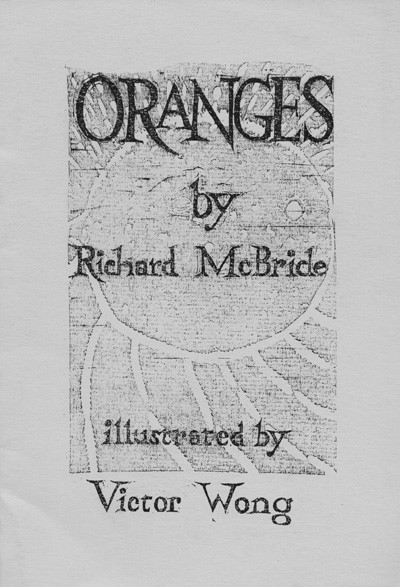
Many of these early poems (eg. There Was This House, San Francisco: One Way Of Doing It, A Small Green Park, Suddenly Butterflies & Hobblegoblin Time) were inspired by the sights and sounds he experienced walking home from City Lights.
What a crazy walk home, what a notebook for a minor poet like myself: girls; kids; tramps; dogs; cars zooming by; magic-slate sky; great views; Washington Square; the tall church of Saint Peter-and-Paul in the distance-seen just above red-and-white Tic Toc No. 3 sign-Sausalito's midget white houses on the black-green hill by the dark-water bay; and still farther away the Sleeping Lady of Mt. Tamalpais; the sky, always the big sky; gulls flying in the air; and sometimes police, fire or ambulance sirens; and down at the foot of Mason Street the bay again; Fisherman's Wharf; the top of Balclutha old sailing ship; occasionally a big ship coming in; and right in front of our flat, the rickety-noisy-left-over-rackety cable cars going up and down . . . Where else in America could a poet have such a pleasant walk home?
Kenneth Patchen thought Oranges was a delight
and was especially taken with Wong's warmly free and unmachine-made
illustrations. He encouraged Dick to continue to reveal the sights, sounds and unaffectedly lively inhabitants
of North Beach through his poetry.
His poem, Project: Death, was published in the first issue of Shig’s Review, a journal edited by his friend and colleague, Shigeyoshi Murao, and published by Adler Press, an independent publisher named after Adler Alley, the alleyway between City Lights and Vesuvio Cafe (now known as Jack Kerouac Alley). The first issue also featured Nameless, a poem by his six-year-old son, Sean, and work by Lawrence Ferlinghetti (as Sadie Monsanto), William J. Margolis (as Bill Margolis), Vincent McHugh, Leonard Dritz, Marvin Friedman, Nicole Friedman, Phil Leider, Richard Sherman and Virginia Christianson.
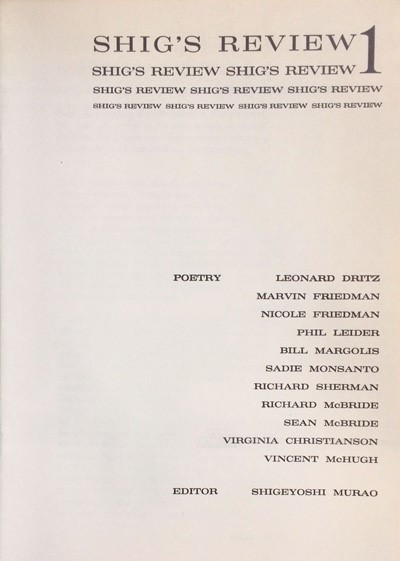
Shigeyoshi Murao, who runs North Beach's City Lights Book Shop for Lawrence Ferlinghetti has edited the first issue of a poetry magazine called
Shig's Review(Adler Press, 35 cents). It's full of lively, angry, often obscurely experimental verse by local poets, some of it strikingly good.
Richard Reynolds, a longtime friend and biographer of Shig, described Shig as a pioneer of the zine movement. The first two issues of Shig's Review were published by Adler Press and the third by City Lights. Subsequent issues were self-published via a photocopier, an approach Dick emulated in later years to self-publish copies of Oranges to sell at his public readings and open house events.
In June, he participated in a poetry reading at the Upper Grant Avenue Street Fair (now known as the North Beach Festival). Hosted by Jory Sherman, the event featured readings from many of the contributors to Beatitude including Cid Corman (founder and editor of Origin), Robert Stock, Michael Greig, William Morris, Stanley McNail (editor of The Galley Sail Review), Daniel Langton, Helen Adam, John Richardson, C. V. J. Anderson, Bill Butler, Tracy Thompson, David R. Wang, Robert Briggs, Victor Gipson, ruth weiss and others.

In the same year, Deathman was published in the Beatitude Anthology, an anthology of work from the first sixteen issues of the Beat periodical. The anthology was edited by Lawrence Ferlinghetti and published by City Lights Books. Ferlinghetti had intended to include another of Dick's poems, but changed his mind when he read Deathman in Beatitude #16, the penultimate issue of the original run of Beatitude, which was published in July. At the time, Ferlinghetti considered Deathman to be the best poem Dick had written.
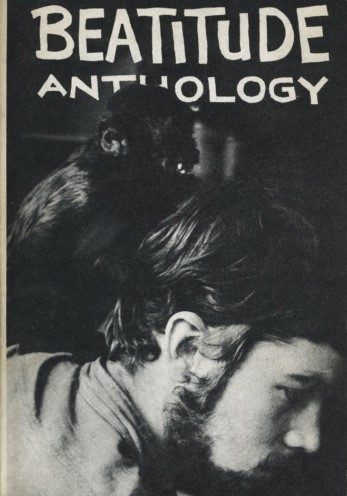
Warren French described the collection as the most important treasury of the San Francisco Poetry Renaissance.
In The San Francisco Poetry Renaissance, 1955-1960 (Twayne, 1991), French divides the poems selected for Beatitude Anthology into two frequencies: Upbeat
and Downbeat.
The downbeat poems include White Sands by Jory Sherman, a poem about the White Sands Missile Range, and Deathman.
The fear assaulting the beats was of American origin. Richard McBride makes this clear when, urging a son to run away in Deathman, the speaker warns,
Here he comes / Putting his / Atomic Finger / On / Your dreams' doorbell.
Deathman was subsequently published as Ballad of Deathman in Ballads of Blood (Golden Mountain Press, 1961), his second collection of poetry.
On 20 November, The Good God of Manhattan, a radio play by Austrian poet and author Ingeborg Bachmann, was broadcast on KPFA, a progressive listener-funded radio station based in Berkeley, California. Dick starred as Jan, a young man from the Old World
, alongside Joyce Lancaster, who starred as Jennifer, a young woman from the New World.
A character in the play, Good God of Manhattan, is on trial for plotting the murder of two lovers. Jan and Jennifer, and for having killed Jennifer in a bomb attack on their love-nest. During the trial the story unfolds, through flashbacks, that love has no place in the social order. The meeting of Jan and Jennifer at first appears banal, but their love intensifies and becomes all-consuming. The drama examines the relationship between men and women, and if ideals make sense in a "practical" world.
In 1961, his play From Out The Whale’s Mouth was produced by the Bread and Wine Mission at 510 Greenwich Street on Telegraph Hill.
Founded by Pierre DeLattre, a liberal Congregationalist minister, writer, and community activist in his twenties, The Bread and Wine Mission was a hub of the San Francisco poetry renaissance, hosting poetry readings, performances, and political discussions.
I wanted to have something important to write about; so, I decided to spend the first 10-20 years of my life involved in social action, trying to encourage what I thought was a very important movement, the counter culture.
Issues 8 - 16 of Beatitude were published at the Bread and Wine Mission, featuring work by Dick, Allen Ginsberg, Jack Kerouac, Lawrence Ferlinghetti, Philip Whalen, Gregory Corso, Peter Orlovsky, Richard Brautigan, ruth weiss, Lenore Kandel, Diane Di Prima, Bob Kaufman, Jack Micheline, David Meltzer, Pierre DeLattre, Alan Dienstag (editor of The Underhound and Beatitude #16) and others.
To collect poetry for our magazine, Beatitude, I had only to walk down the street and gather poems in my shirt.
The Mission, as it was informally known, was also home to Wilder Bentley's Bread & Wine Press, which published four pamphlets of poetry, including 21 Carlisle by Blake Reed, Dick's first collection of poetry, Oranges and Colloquy by C. V. J. Anderson. The pamphlets were hand-set and printed by Wilder Bentley on a Chandler Price printing press and edited by Pierre Delattre. The Bread & Wine Press also published Logos Review, a short-lived North Beach literary journal featuring poetry, fiction and essays, including Dick's short story, Hammer. Logos Review was edited by Reverend Jack M. Matlaga of the Bread and Wine Mission, along with Milton Savage and H.Z. Bennett.

Dick's poems, St. Francis (Random thoughts of a Protestant Cop) and Stones, were published in The Real Bohemia: A Sociological and Psychological Study of the “Beats” (Basic Books, 1961), by Francis Joseph Rigney and Lemuel Douglas Smith. The poems appeared in Chapter 9, The Case for Creativity, a small anthology of poetry from issues 1-15 of Beatitude.
In September, he participated in a series of author readings presented by Millard Books at 1548 California Street. The series also featured readings by ruth weiss, James Broughton, Carol Bergé, Lee Breuer, Pierre DeLattre and Carl Linder.
On 18 October, The Poetry Center, under the direction of James Schevill, presented a programme of readings by Dick, Melville Abbett and Frances Crary. The fall season also featured readings by Lawrence Ferlinghetti, John Ciardi, Robert Bly, Denise Levertov and Luis Cernuda.
Just under a week later, on the 23 October, he participated in a poetry reading for the benefit of The Galley Sail Review at The Old Spaghetti Factory, 478 Green Street. The event also featured readings by James Schevill, Pierre Delattre, Jory Sherman, Alan Dienstag, Madeline Gleason, Helen Adam, Tracy Thompson, Sanford Goldberg, Melville Abbett, Stanley McNail, Ralph Pomeroy, Bill Reque, Gary Wagner and John Crowell.
Later that month, his second collection of poetry, Ballads of Blood, was published by Alice and Harry Graves' Golden Mountain Press at 57a Columbus Avenue and distributed by City Lights.
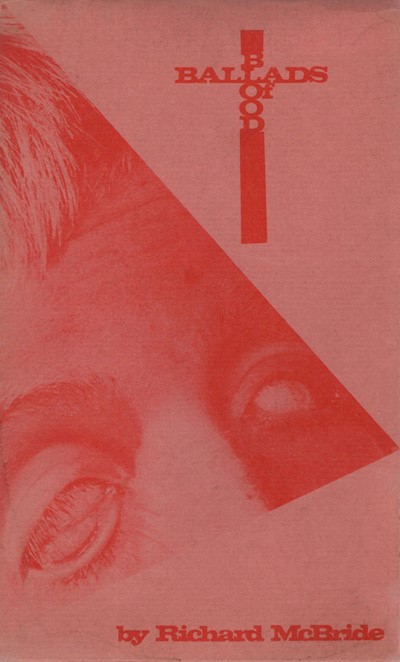
Darker in tone than Oranges, Ballads of Blood is a collection of seven protest poems: Ballad of Blood (An Impression of the Charles Starkweather Murders), Ballad of The Dead Children, Ballad of Rape (August 6, 1945, 8:15 A.M), Ballad of Wheat, Ballad of Deathman, Ballad of St. Francis (Random thoughts of a Protestant Cop) and Lullaby.
In the opening poem, Ballad of Blood (An Impression of the Charles Starkweather Murders), Charles Starkweather and Caril Ann Fugate are portrayed as dogs, pursued across the Great Plains by one million Self-eating Christs.
At the time of the killing spree, the Starkweather murders dominated the local headlines. They made quite an impression on Dick, who was working as a scriptwriter and announcer for KHAS, a local radio station in Nebraska.
Ballad of Blood (An Impression of the Charles Starkweather Murders) was one of the earliest representations of the murders in popular culture. The killing spree subsequently influenced Bruce Springsteen's song Nebraska and the films Badlands, Kalifornia and Natural Born Killers.
The second poem in the collection, The Ballad of the Dead Children, was composed after witnessing a pre-dawn flash from one of the atomic detonations at the Nevada Test Site in the 1950s and discovering that his young son was awake, eyes wide open, staring with fear.
What had awakened him? Had he in some way felt the vibrations of death? But he didn't want to die. Children never do; there is so much for them to see and do. Everyone should have the right to live if he wants to; his death should not be arbitrarily decided by a leader.
The remainder of the poems deal with the atomic bombing of Hiroshima, the atomic bomb, famine and bigotry.
The cover photograph is by Robert Stade, and the back cover features a quote from From Out the Whale's Mouth:
A war makes them thankful for peace,
And peace makes them ripe for war.
In the same month, Golden Mountain Press published Berlin: A Note On My Poetics by Lawrence Ferlinghetti.
Previous Golden Mountain Press titles include Ferlinghetti's political broadside Tentative Description Of A Dinner To Promote The Impeachment Of President Eisenhower (1958), Tower, with Manifesto by Max Finstein by Philip Lamantia (1958), Why I Live on the Mountain: 30 Chinese Poems from the Great Dynasties. A New Translation by C.H. Kwock and Vincent McHugh (1958) and But Never Mind Poems, etc. 1946-50 by Tram Combs with calligraphy by Win Ng (1961).
On Christmas Eve, the San Francisco Examiner reported that:
...Mike McClure, David Melzer[sic] and Richard McBride of the City Lights area are trying to push their "Journal for the Protection of All Beings."
Journal for the Protection of All Beings (City Lights Books, 1961) was one of the first radical ecological journals and featured work by Thomas Merton, Bertrand Russell, Gary Snyder, Kay Johnson, Antonin Artaud, Gregory Corso, Albert Camus, Michael McClure, James Mitchell, David Meltzer, Allen Ginsberg, William S. Burroughs, Robert Duncan, Norman Mailer, Kenneth Patchen and Percy Bysshe Shelley.
On the copyright page, Dick and his brother Robert are credited with Business & Circulation.
It also states that:
Due to the transitory nature of life on earth this Journal is not sold on a subscription basis.
In January 1962, his work was published in the first issue of Olympia, the first of four issues of the periodical published in Paris by Maurice Girodias’s Olympia Press.
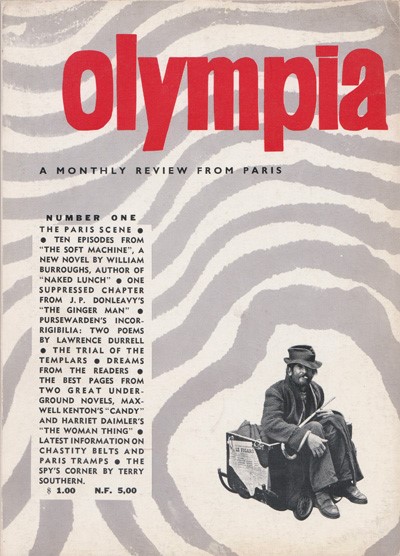
Perhaps inspired by Jack Kerouac's Book of Dreams, an experimental novel based on Kerouac's dream journal that was published by City Lights the previous year, Girodias replaced the traditional letters from the readers with their dreams.
Every month Olympia will publish, instead of the traditional letters from the readers——their dreams... As this is Number One and we have no readers, we have asked Lawrence Ferlinghetti to advertize our request in his bookstore, in San Francisco:
We buy dreams...
Dick provided the first contribution – a surreal account of a dream involving a book purchased from a second-hand bookstore in San Francisco, executions on the summit of a bitterly cold, windswept Russian mountain, Fyodor Dostoevsky, Fagin, and a model named Rita Queen.
The first issue of Olympia is notable for including excerpts from William S. Burroughs’ The Soft Machine and a suppressed chapter from J.P. Donleavy’s The Ginger Man.
In July, Ferlinghetti offered Dick and Robert a 20% share of the City Lights stock in recognition of their help in building up the business. Ferlinghetti envisioned that City Lights would continue to operate as before with Shig as general manager, Robert as business manager, Ferlinghetti as editor, and Dick as mail order, magazine & little press czar.
In late August, the United Church of Christ, Northern California Conference, announced a camping weekend for young adults to be held in Cazadero over the first weekend of September. With the theme Art Speaks to the Church, the event was led by Dick, Reverend Jack M. Matlaga of the Bread and Wine Mission, and David F. Reed, director of music at the Mill Valley Community Church.
At the end of the year, The Ballad of the Dead Children was published in the first issue of Root and Branch: A Radical Quarterly, the first New Left quarterly, edited by David Horowitz and Robert Scheer, who would later work as a clerk at City Lights. The first issue also features Ferlinghetti's Berlin: A Note On My Poetics.
In 1963, Haircut Dream was published in the first issue of City Lights Journal alongside work by William Carlos Williams, Allen Ginsberg, William S. Burroughs, Jack Kerouac, Gary Snyder and Lawrence Ferlinghetti, amongst others.
Dick and Miles Payne are credited as editorial assistants. Robert is credited with Business & Circulation.
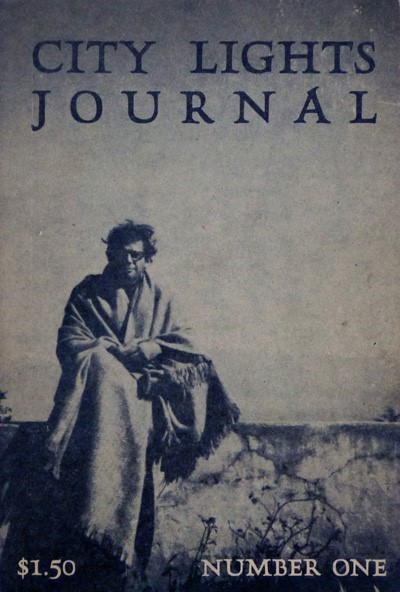
Kulchur, the New American Poetry’s critical arm, wrote:
Two of the young writers involved with visionary experiences are to be taken more seriously. Richard McBride describes a series of wild dream sequences revolving around the appearance and disappearance of Suzy Wong. Going from alley to alley, through many doors, Haircut Dream is reminiscent of the magic circus in Steppenwolfe [sic].
Dick’s first book, Lonely the Autumn Bird: Two Novels, was published by Swallow Paperbooks shortly after the City Lights Journal. The publisher, Alan Swallow, was renowned for taking chances with authors and poets, including Allen Tate, Thomas McGrath and Anaïs Nin.
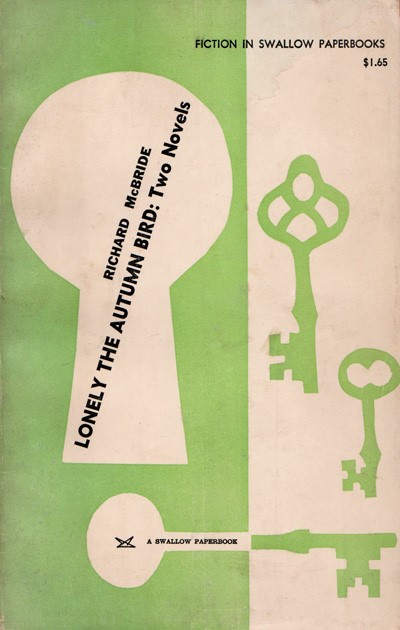
The two novels of this fine book are wonderful discoveries – of a compelling new writer, of characters entirely worthy of a real talent for fiction, and of a scene treated warmly and yet with bitter insight.
The title novel, Lonely the Autumn Bird, set in the
upper South,explores the character and situation of a woman, made empty and pitiable by her culture, and brings the story to a most effective symbolic ending.The second story Tilt, is so aptly titled: for here is the tilt in well meaning characters caught in cultural emptiness. Again, the author finds the meaningful and symbolic overtones to capture his insight and awareness of pathos.
Richard McBride is a young author who has appeared in various magazines, including the new City Lights Journal, with which he is associated.
On 16 February 1964, a recording of Dick reading from Tilt was broadcast on KPFA.
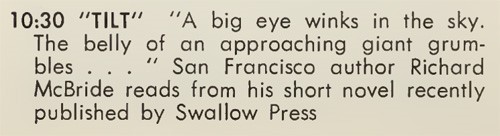
Two years later, Barbara Grier, writing under the pen name Gene Damon, reviewed Tilt in the February 1966 edition of Tangents, a homophile magazine published by One:
Fringe fiction is often too esoteric but Tilt, a short novel by Richard McBride, in his two-novel collection Lonely The Autumn Bird, Denver, Alan Swallow, 1963, is more than worth the $1.65 price. It is a formless story set in a nameless city. The surprise is in the careful inclusion of every possible homosexual passion without any vulgarity or obvious levers, from the swishy boys and screaming queens to the sober, settled boy and the older man who has been the route and offers a helping hand. There is Big Boy, the frustrated he-man who lives each day to find a queen to beat up and sometimes visits the local whorehouse for "special treatments." He is asked: "I don't know why you don't get a fairy if this is all you want." Wandering through the streets preaching love from a mind gone away in horror, Brain Sick Brown dies struck by lightning: "In the instant before he falls he is lighted up as if he were a picture on the face of a violated slot machine: TILT TILT TILT."
In April, Dick traveled to London for four months to help bohemianize
Better Books.
Tony Godwin, the founder of Better Books and Chief Editor at Penguin Books, had visited Ferlinghetti in San Francisco in October 1962 to discuss a three-poet anthology that Penguin wanted to publish in England. Godwin wanted to make Better Books more like City Lights and suggested a “work swap” whereby Ferlinghetti would send one of his Beats over in exchange for an English bookseller who needed some education.
I came over to England first in 1964 when there was a bookshop in London called Better Books, some of you might remember it. The owner and manager was Tony [Godwin]...who was also the editor of Penguin Books at that time, and he had met Ferlinghetti in the city of San Francisco and came back and said:
I'd like to have a work swap with you, Ferlinghetti. You send one of your Beats over to London, and I'll send you one of my English salesmen who needs a little education.So I went over for four months working and trying to bohemianize Better Books. I think it worked – for a while anyway.
During his time in London, Dick met Tennessee Williams, Samuel Beckett, John Calder and Robert Bly, among others.
Thinking back – London/San Francisco were like neighbouring towns.
In early July, his poem Days Are Sun was published in The Spectator, the long-running British cultural and political magazine.
At the end of the month, Dick's time at Better Books came to an end, and he returned to San Francisco.
Tony Godwin subsequently hired a string of influential managers, including Bill Butler (an American poet who had appeared on the same bill as Dick at the Upper Grant Avenue Street Fair in 1960 and whose work had been published alongside Dick's in the fifteenth issue of Beatitude), Barry Miles and Bob Cobbing.
In October, Godwin expanded Better Books, opening a coffee shop and paperback bookshop in the adjoining premises on New Compton Street.
The paperback bookshop stocked the complete City Lights Books catalogue, which City Lights would send over in exchange for second-hand copies of Penguin paperbacks. The bookshop also imported paperback titles published by Grove Press, New Directions, and Alan Swallow, whom Dick had introduced to Better Books during his tenure at the original bookshop.
In May 1965, Better Books became the centre of the British Poetry Revival and the UK Underground when Allen Ginsberg arrived at the bookshop unannounced and offered to read anywhere for free. Miles, who had replaced Bill Butler as manager of the paperback bookshop in January, immediately asked Ginsberg to do a reading at the bookshop.
Despite not being advertised, the event was a sell-out. The audience included Donovan, Gypsy Dave, Andy Warhol, Gerard Malanga, Edie Sedgwick and Ian Sommerville.
Miles hired a Ferrograph reel-to-reel tape recorder, and Ian Sommerville recorded the reading. Allen Ginsberg reading at Better Books was released in a limited run of ninety-nine copies with a sleeve designed by Penguin's cover artist and art director, Alan Aldridge.
Ginsberg's first reading at Better Books was described by Jeff Nuttall as the first healing wind on a very parched collective mind.
In Peace News, Tom McGrath wrote: This could well turn out to have been a very significant moment in the history of England – or at least in the history of English Poetry.
Shortly after Ginsberg's reading at Better Books, plans were hatched for the International Poetry Incarnation.
Meanwhile, back in San Francisco, Dick continued working on his third novel, Memoirs of a Natural-Born Expatriate, which he started writing as soon as he returned from London.
The only writer I ever knew who had a different habit of working was Dick McBride in San Francisco, who got up every morning at four and wrote on his novels until it was time to leave for work.
His family had moved to Potrero Hill, living in Mariposa Street before house sitting for the Ferlinghetti's at 706 Wisconsin while they were travelling in Europe. Ferlinghetti had purchased the Victorian property in 1958 and considered the location to be close enough to North Beach and yet removed from it.
When Kirby and the children returned earlier than expected, Dick moved to 1312 18th Street, a ten-minute walk from the Ferlinghetti's, and lived there until moving to England in 1969.
Betty and Dick McBride and their two boys lived down the street from us, and on Saturday night and other times too, when Dick and Betty came bounding up the hill, windblown, flushed, laden with bags of beer, I always seemed to hear someone cry
God bless all here!
In The Astonished I, Dick gives a nostalgic account of his time in Potrero Hill with the 'Potrero Hill Gang', recounting softball games with Ferlinghetti at the Jackson Park playground and their annual Pot Hill Kite Flying competitions on an empty parking lot next to the Potrero Hill playground.
In January 1966, Robert quit as business manager of City Lights, and Dick took over the role.
In August, his third novel, Memoirs of a Natural-Born Expatriate, was published by Alan Swallow.
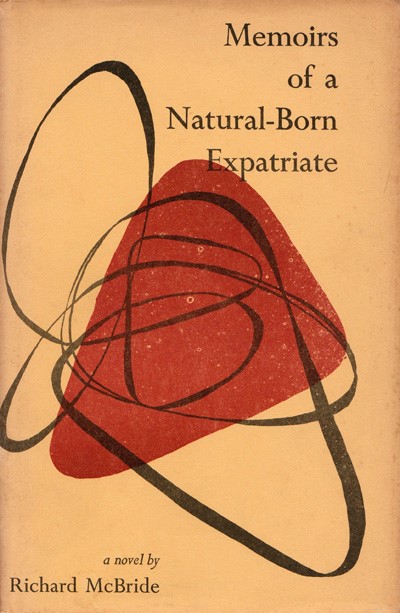
Richard McBride's second book pretends nothing: it is the story of a man who (like the author) works at the famous City Lights Bookshop of San Francisco, knows the people from all over the nation who have come to this famous place as to a sanctuary, and goes home after work to a family of wife and two kids…Memoirs of a Natural-Born Expatriate tells us that we have a new and fine comic writer in our midst.
The cover design was adapted from a drawing by Helen Strong, who designed the cover for Anaïs Nin's novel, Children of the Albatross (Alan Swallow, 1959).
On 10 October, Alan Swallow wrote to Dick to let him know that George Whitman had reached out to discuss the possibility of Dick reading at Shakespeare and Company in Paris. Alan also mentioned his plan to publish Dick's play, The First Clerk's Play, in PS: Poems and Stories before the end of the year, and noted that he hoped to make a decision soon regarding the next novel publishing project.
In November, San Francisco Police Inspectors, Sol Wiener and Peter Maloney, purchased a copy of Lenore Kandel's The Love Book, a slim volume of erotic poetry published by Stolen Paper Review Editions earlier that year, from the Psychedelic Shop in Haight-Ashbury. Allen Cohen and Jay Thelen were arrested for possessing obscene material with intent to sell. Shortly afterward, City Lights clerk Ron Muszalski was also taken into custody after a plainclothes police officer requested a copy of the book. Muszalski, an outspoken believer in free speech who was prepared to be arrested, asked the officer if he would like enough copies for the whole department. The arrests, subsequent protests, and publicity sparked months of debate, leading to the longest Municipal Court trial in San Francisco’s history.
Later that month, Alan Swallow, one of the biggest little publishing houses in America
, died at his typewriter from a heart attack, aged 51. Described as a one man…literary establishment
, Alan was responsible for editing, designing, printing, promoting, and distributing the books he published. Warren French was saddened to note that …apparently no one will take over the work he left off.
On 14 May 1967, the San Francisco Chronicle published a tribute to Alan Swallow signed by several writers whom Swallow had published, including Dick, James Schevill and Hester G. Storm. They concluded the letter, Those of us who published with him and knew him as a friend will miss him greatly. We hope that the means will be found to continue his rare and unique publishing venture as a memorial to him and we pledge ourselves to help in any way we can.
In 1979, thirteen years later, Swallow Press entered into a licensing agreement with OU Press, but by then, Memoirs of a Natural-Born Expatriate had dropped off the radar.
Between 1956 and 1967, City Lights Books were distributed in America by the Paper Editions Corporation and then, for a short period, by Bookazine. In 1967, City Lights began distributing their own books and also started distributing books from other publishers in San Francisco.
Due to a lack of space at the bookstore, City Lights relocated their publishing operation to 1562 Grant Avenue. While Ferlinghetti was recovering from pneumonia that year, Dick rented the storefront of the old butcher's shop to use as the distribution center for City Lights publications and the other small presses. Dick ran this part of the business with his brother Robert and Martin Broadley for several years. He also rented one of the building's upstairs apartments at 485 Filbert to use as an editorial office and crash pad for visiting writers. The apartment later served as Allen Ginsberg’s center of operations for his investigations into CIA drug trafficking.
Later that year, Robert started contacting American publishers about his proposed plan to set up a distribution center for books published by small presses and established McBride Brothers & Broadley International Book Distributors.
Ferlinghetti dropped the little press books due to the extra work involved (and the fact that some of them were taking government money) and handed over the distribution to McBride Brothers & Broadley and others.
In June, the Los Angeles Free Press reported that the Love Book trial had resulted in verdicts of guilty and a determination by the jury that the book of poems is obscene.
Representatives of Allen Cohen, Jay Thelin and Ron Muszalski stated that they planned to appeal the decision to a higher court, arguing that constitutional free speech considerations should override the lower court jury's decision. Speaking to the Free Press, Dick noted that both City Lights and the Psychedelic Shop were concerned about the legal costs of the appeal. In 1971, the verdicts were overturned on appeal.
In the autumn of 1967 (the tail end of the Summer of Love), Robert and Martin moved McBride Brothers & Broadley over to England to promote and distribute City Lights Books and other small U.S. avant-garde publishers in the UK and Europe.
McBride Brothers & Broadley are in England to distribute books to the trade – in England and in Europe. Our list is small, our appeal limited (not to mention our capital), but our enthusiasm limitless. We bring new discoveries and the best of American avant-garde writing and we hope to return the favour by exporting the best English avant-garde to booksellers in the States.
City Lights Books were originally distributed overseas by W.S. Hall & Co. The Scorpion Press (a small publisher that had published the early work of George Macbeth and Peter Porter) became the distributor of City Lights Books in Great Britain and Europe in October 1960 and was succeeded by Mandarin Books of London in 1964.
McBride Brothers & Broadley took over the distribution of City Lights Books from Mandarin and began distributing them to the trade in England and Europe from Wood Cottage, a haunted thatched cottage in Great Horwood, Buckinghamshire.
Alongside City Lights Books, they also distributed the allied
These included Something Else Press, Leroi and Hettie Jones's Totem Press, Corinth Books, George Hitchcock's Kayak Books, Aurehan Press and others.little press
branch experimental publishers that City Lights encourages.
When we started McBride Brothers and Broadley in 1967, we were like return journey-pilgrims landing at Virgin Rock, England. Bob and Martin spent a lot of time that year visiting many bookshops, contacting friends and libraries, writing letters, managing to get interviewed by the Bookseller. Many people had heard of what was being written and published in San Francisco, but until we got here about the only way of getting a City Lights book was to have a friend bring one over. Again it was a case of being in the right place at the right time.
In 1968, Dick participated in a reading of Jack Rainsberger's poetry. The poems, written while Rainsberger was awaiting execution at Nevada State Prison, were read by a group of San Francisco poets and writers, including Dick, Kenneth Rexroth, Lew Welch, Brother Antoninus, George Hitchcock, David Meltzer, Allen Cohen and Sister Mary Norbert. A recording of the reading was broadcast on KPFA on 27 August and was later released as From Deathrow: The Poetry of Jack Rainsberger on cassette tape by Pacifica Programs.
By 1969, Robert and Martin had been working in England for two years, laying the groundwork for McBride Brothers & Broadley. Robert suggested that Dick come over to England for two years, and then they could swap back and forth, taking turns at City Lights and McBride Brothers & Broadley.
Dick and his family moved to England in September. He managed the business with his wife, Betty, who did the paperwork, and his sons, Sean and Brennan, helped out after school. They continued to operate from the cottage in Great Horwood, and they rented an abandoned Gothic-Victorian Primitive Methodist chapel in Little Horwood Road to use as a warehouse.
Still think it’s a kick, all them dirty words (what used to be dirty words before the Beat/Hippie wash was hung out to dry) stored in an abandoned Methodist chapel…
By the time Dick left for England, City Lights Publishers was doing better than the bookstore. Between 1967 and 1969, City Lights published a total of seventeen books. In an interview conducted by David Meltzer and Jack Shoemaker in Spring 1969, Ferlinghetti joked: The bookstore really is unintentionally a nonprofit operation. Like in that old joke. For years the bookstore supported the publishing. Now the publishing is better off than the bookstore.
Robert returned to City Lights in October and resumed his role as business manager.
1970s
About a year and a half into Dick's stint in England, Robert and Martin decided they didn't want to be involved with McBride Brothers & Broadley anymore, and Dick took over the business.
Bob phoned and said
We don't want it anymore. You can have the business – liquidate it or sell it or something.So I did [sic], and I ended up making a big improvement.
In 1973, following several years of correspondence with James Laughlin, McBride Brothers & Broadley took over the distribution of New Directions titles in the United Kingdom and on the Continent.
In July, Dick and Bernard Stone hosted a “Fourth of July Party” for Allen Ginsberg at the Turret Bookshop, London. Ginsberg’s The Fall of America: Poems of These States 1965-1971 had been published by City Lights Books earlier that year, and it seemed appropriate to hold a reading on the birthday of American Independence. William S. Burroughs and British publisher Tom Maschler were among the guests, and the party was a great success.
Later that summer, Dick invited Allen Ginsberg to visit him at his home in Great Horwood along with Diana Gravill and Nick Rochford from Compendium Books in London. They visited the old Methodist chapel where the books were stored, and Ginsberg advised Dick that his new bookshelf for the New Directions line was too small.
As it was a Sunday and the pubs weren’t open yet, Ginsberg suggested that they visit the Church of St James. While Dick, Diana and Nick were looking around the church:
Allen hooked up the organ and sat down and for about half an hour gave a concert of Hebraic sounding, prophetic organ hymns – possibly one of the most unusual guests, organist, prophet, ever to visit old St. James – and no one knew it except the four of us (possibly at the time not even aware of it ourselves) and those friends I've blabbed to since, about the time Allen Ginsberg, world famous obscene holy Beat poet of generation worshiped in the Church of England, for it was worship, if worship means the expression of reverence, if reverence means feeling of awe and admiration, if awe and admiration mean love, if love means close contact with warmth and sensuality and strangely comfort and peace and touching sometimes something thought not possible to touch…
In 1978, Jay Landesman (the writer and publisher who founded Neurotica in the late 1940s and provided an early platform for Ginsberg, Kerouac and John Clellon Holmes), interviewed Dick at his home in Buckinghamshire for the Bookseller.
Dick completed work on his manuscript Letter to Allen, a personal and touching letter addressed directly to Allen Ginsberg. After reading the manuscript, Ferlinghetti advised Dick that it would work better as a memoir.
By the end of the decade, Dick represented over thirty publishers, the majority small presses in America (many of them friends from the old days in San Francisco), the best sellers being New Directions and City Lights. The Methodist chapel housed an impressive collection of 30,000 small press books, earning Dick the title of The Godfather of small publishers.
However, there were dark clouds on the horizon.
1980s
At the beginning of the 1980s, it was clear that McBride Brothers & Broadley was in trouble. In 1982, Dick managed to get more capital invested in the business, but unfortunately, this wasn't enough to turn things around. In July, Dick's contract with City Lights came to an end.
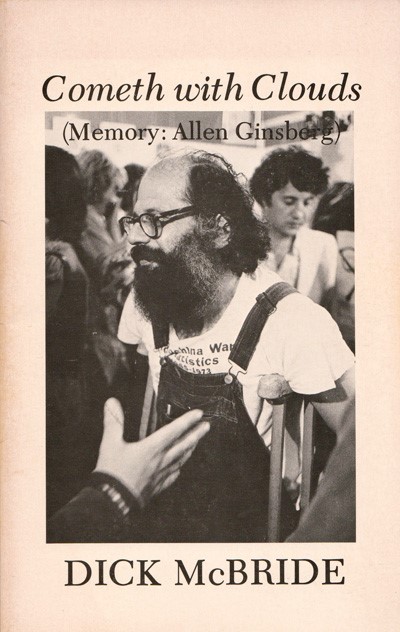
Later that year, Dick's memoir of Allen Ginsberg, Cometh With Clouds, was published by Charles and Pamela Plymell's Cherry Valley Editions.
Dick McBride, long-time manager and friend of City Lights, has written a memoir of Allen Ginsberg which is a curious and intuitive perception of the poet. Dick knew Allen in and about City Lights during the early years after the publication of “Howl.” He liked Allen a great deal but nevertheless reserved his critical enthusiasm for Allen’s poetry. A struggling novelist himself, Dick wanted both more and less from Allen’s writing. The style and content were both so foreign to Dick, both as a person and a writer (it seemed to me). That is what makes this memoir so interesting and so out of the usual run of writing about the great poet.
It contains a foreword by Lawrence Ferlinghetti and is illustrated with photographs of McBride, Ginsberg, Ferlinghetti, Kenneth Patchen, Peter Orlovsky, William and Aram Saroyan, and Bernard Stone.
Cometh With Clouds is a deeply personal book. Likely you won’t read a more intimate book about Ginsberg. As well as stories of being with Allen in London bookstores, parties, Allen is to be found walking the streets of the little villages in Buckinghamshire where McBride had relocated from San Francisco to set up his book distribution service McBride & Broadley.
Carl Solomon, the American writer and dedicatee of Ginsberg’s Howl, wrote:
McBride’s memoir of experience shared with Allen is fast, staccato, pungent, rich in nostalgia and written in a very individualistic style: countless phrases dumped into very long sentences – divided by commas, clear and fast-moving. A short book and a lively read. What is perhaps more significant than the book itself is its relationship to the Ginsberg/Beat legendry [sic] which continues to amaze with its persistence…Read McBride’s book. It’s fun.
In 1983, fifteen years after Robert and Martin moved to England, McBride Brothers & Broadley went into voluntary liquidation.
Why did we go under then? Success in every area but the bottom line, i.e., profit. It takes money to make money. We had started the business with very little money and ran with it as far as we could. It was like the last big pot in a poker game we had the chance at winning, but we couldn't find anyone to take our markers. To be honest, I was getting tired, and the alarm clock didn't work anymore.
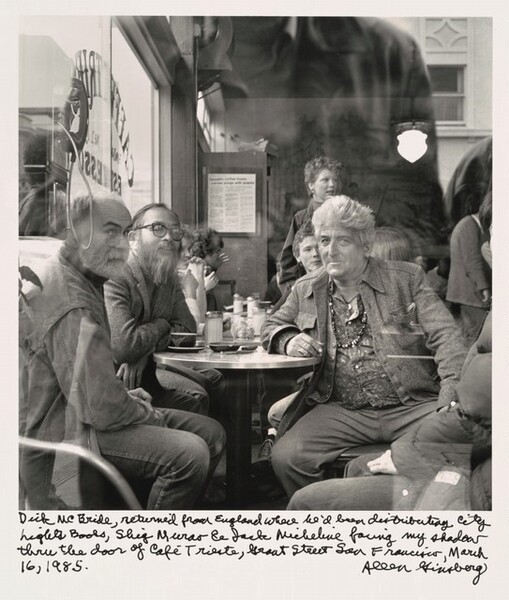
Dick visited San Francisco in 1985 and met with Allen Ginsberg, Shig and Jack Micheline at the Caffe Trieste, a popular meeting place for Beat writers in the 50s and 60s.
The reunion was photographed by Ginsberg, whose inscription on one of the copies of the photo reads: Dick McBride, returned from England where he’d been distributing City Lights Books, Shig Murao & Jack Micheline facing my shadow through the door of Cafe Trieste, Grant Street San Francisco, March 16, 1985.
Later that year, Dick moved to Australia with his second wife, Jacqueline Briggs, who he married in 1981. They lived there for three years and Dick spent his time writing and walking the dog.
They returned to England in 1988, settling in West Malvern, Worcestershire, where Jacqui taught art and drama at St James's and the Abbey.
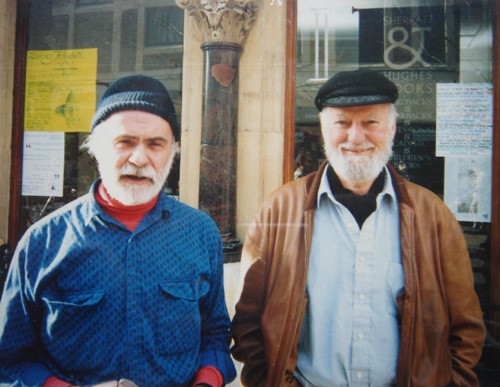
Dick worked at Sherratt & Hughes Books in Worcester for nine months, during which time he arranged a book signing for Lawrence Ferlinghetti, who was in the country to promote his novel Love in the Days of Rage.
On 31 May 1989, Dick gave a reading at St Ann's Well Café, a vegetarian wholefood café on the eastern slopes of the Malvern Hills. The reading was part of the annual Malvern Fringe Festival and was the first of several readings he gave at the hillside café.
In September, he starred as Norman Thayer Jr. in Malvern Theatre Players' production of Ernest Thompson's On Golden Pond at Malvern Festival Theatre.
1990s
On 14 September and 15 September 1990, Dick and Jacqui starred alongside Caroline Nijeboer in a production of The Road to Mecca, a powerful play by Athol Fugard inspired by the story of Helen Martins, an outsider artist who created The Owl House with Koos Malgas in Nieu-Bethesda, South Africa. The play was presented at St James's and the Abbey in the Anstruther Theatre on Westminster Bank and directed by the headmistress, Elizabeth Mullenger.
In 1993, Dick attended Allen Ginsberg's reading at the Cheltenham Literature Festival. Ginsberg was delayed by British Rail, so P. J. Kavanagh and John Calder stalled for time by talking about Ginsberg's life and work. Calder read Howl in a last-ditch attempt to fill the silence, but ran out of steam. As the audience was getting restless, Dick stepped in:
Before I could take over where John had left off a member of the audience called out a request that I read William Carlos Williams' introduction to Howl, which I did and just as I finished the audience broke into applause. My first thought was, Heck, I know I read well, but I wasn't that good, when I looked up and saw Allen approaching the stage (good old British Rail).
Dick's account of the event is included in Allen Ginsberg & The Blue Rinse Brigade, his affectionate memoir of Allen Ginsberg that was published in Urthona – Buddhism & Art Magazine in 2001.
In 1994, Cwazy Man, a short story about Charles Starkweather's detention and execution, appeared in Debatable Lands, the twenty-first issue of John Murray's Panurge New Fiction.
The following year, Dick's essay recounting a conversation with an emotional Jack Kerouac – who, at the time, called City Lights to speak with Lawrence Ferlinghetti about publishing Visions of Cody – appeared in Kevin Ring's The Beat Journals Volume One. A revised version of this essay became the opening chapter of his fourth novel.
In June, How Many Big Things, a love poem written for Betty from his first collection of poetry, was published in Beat Voices: An Anthology of Beat Poetry (Henry Holt, 1995). It was edited by the poet and novelist David Kherdian.
Later that year, Dick and Michael Wilding established McBride's Books. Wilding, a Worcester-born writer and academic, had previously co-founded Wild & Woolley with Pat Woolley in 1974, an Australian small publisher that served as the Australian agent for City Lights Books, New Directions, and Black Sparrow Press during the 70s and 80s.
Dick's fourth novel, The Astonished I (Memories & Wet Dreams), the first book to be published under the McBride’s Books imprint, was published at the end of the year. It contains an introduction by Charles Plymell and is dedicated to his friend Tim Prael, who features prominently in the novel.
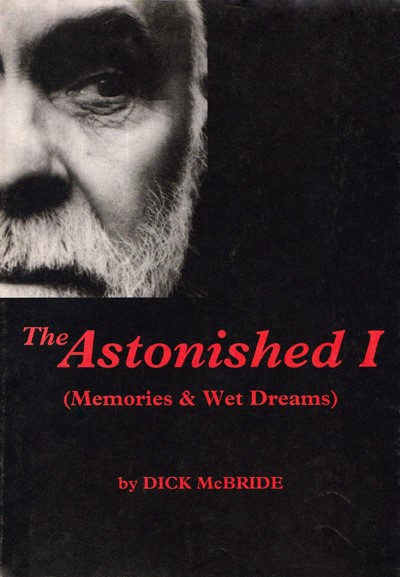
The Astonished I, a recollection of the author's time in San Francisco in the 50s and 60s, is comprised of a series of sketches of events in and around City Lights, North Beach & Potrero Hill.
It features first-hand memories of City Lights, Kerouac, Ginsberg, Ferlinghetti, Kenneth Rexroth, Brendan Behan, William Saroyan, and various North Beach characters, as well as the sinister men in bowler hats.
It's about San Francisco and City Lights in the 50s and 60s. It's nostalgic and probably absolute nonsense – the part left out by eminent historians and prominent poets, in other words – true, unvarnished lies.
The title of the novel is a play on words of Kenneth Patchen’s An Astonished Eye Looks Out Of The Air (Untide Press, 1945), the inspiration for the City Lights Pocket Poets Series cover design.
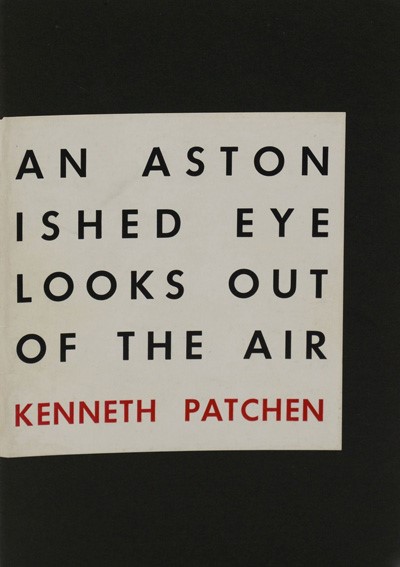
On 23 November, Dick gave a reading from The Astonished I at Compendium Books, which in the 1990s had hosted regular readings organised by Mike Hart, who presided over the poetry and fiction department.
Mike formalised its literary scene by initiating regular readings in the bookshop, something of an innovation at the time. Visiting Americans, from old beat heroes like Lawrence Ferlinghetti to new literary lions like Walter Mosley, read there; so too did the London writers Iain Sinclair, Martin Millar and Derek Raymond.
In January 1996, McBride's Books published Somewhere New: New & Selected Stories by Michael Wilding.
On 1 October, Dick's wife, Jacqui, passed away.
She loved beauty, found it everywhere; it was her inspiration. She made you feel special; being with her, in her presence, was a celebration. Her eyes were grey. although sometimes they seemed to be blue. She had an unbelievable smile; she knew she was happy. She was lovely; she was my wife.
In November, Dick was a guest at the Conegliano Poetry Festival, where he read his poetry alongside Yevgeny Yevtushenko, Andrey Voznesensky and Roger McGough. The two-and-a-half-day festival was organised to honour City Lights and the Beats and to celebrate Allen Ginsberg’s 70th Birthday.
In January 1997, Hurry, Armageddon – an essay about drug culture – was published in the third issue of David Rose's Main Street Journal. The essay reflects on life in San Francisco during the 1950s and 1960s, recounts Ginsberg's visit to the Book-Church
in the 70s, and offers a critique of 90s drug culture.
The following month, em writing and music, a new publication dedicated to promoting progressive new writing, new music, and graphic art
, published a selection of Dick’s flash fiction.
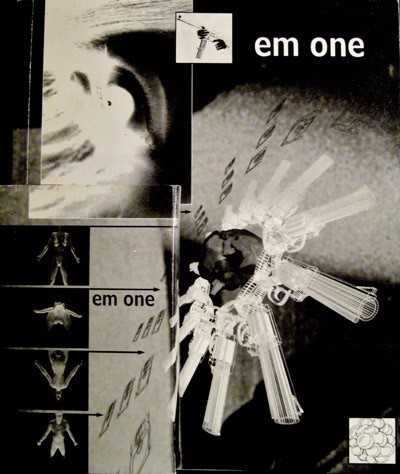
Dick's contributions included: Fleur-de-lis, The Soft Watch, What’s So Good About Friday?, Mysterium, Step Right Up, Folks!, Stand Up Comedian, Picasso Couldn’t Say it all in Guernica, The Greatest Story Never Told, Enough To Try the Patience of a Saint, The House that Jack Built, Satie-Faction (originally published by Martin Wheeler in 1993) and Lady Day Dies, an abridged version of his poem about the death of Billie Holiday.
On 21 March, Dick read a selection of poems from Beatitude, Oranges and Ballads of Blood at Oddfellows in Colwall, Herefordshire. The event was organised by Malvern Fringe Arts.
Later that year, Dick published Jacqui (Love Poems), his third collection of poetry.
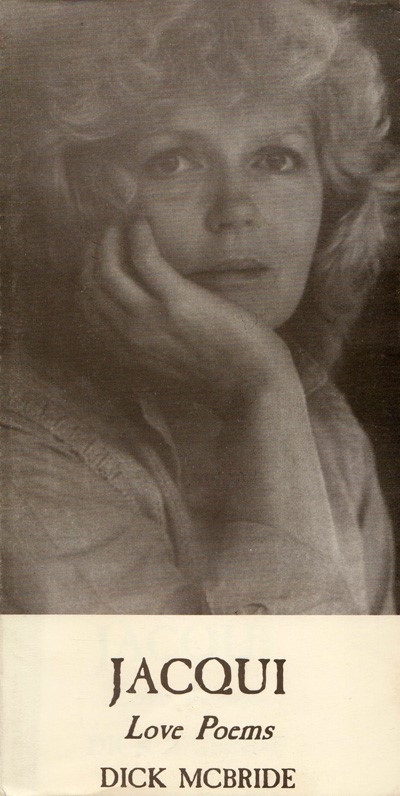
Originally privately produced in 1994, Jacqui (Love Poems) is a collection of poems dedicated to his second wife. The epigraph is taken from Kenneth Patchen's "picture-poem" The Concerns of the Heart:
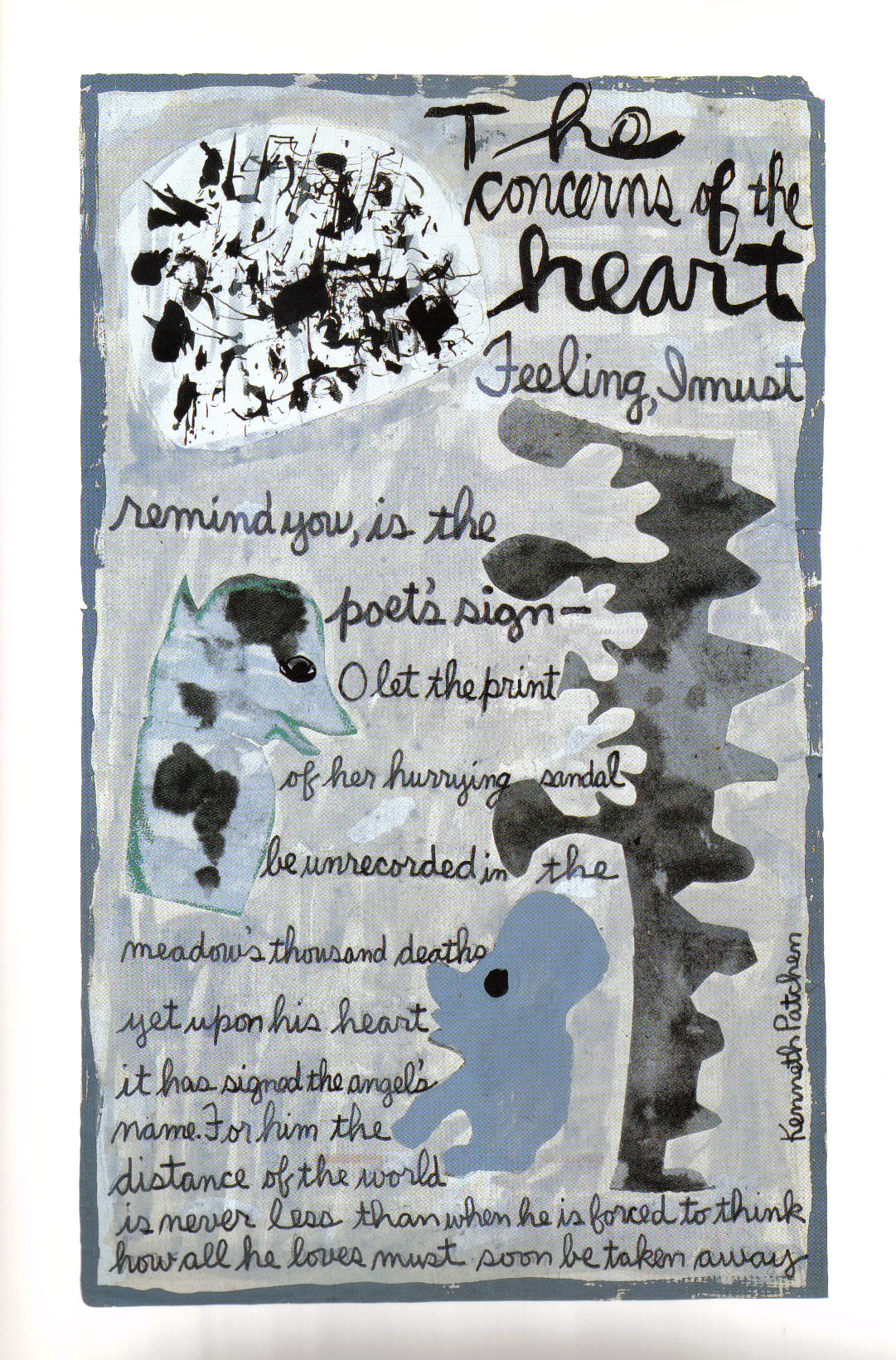
O let the print
of her hurrying sandal
be unrecorded in the
meadow's thousand deaths
yet upon his heart
it has signed the
angel's name. for him the
distance of the world
is never less than when he is forced to think
how all he loves must soon be taken away
In December, Snowdrops (originally published in Jacqui), Clouds, and It might as well be Saturday were published in Critical Survey, a peer-reviewed literary journal with a primary focus on Renaissance and Modern writing and culture.
In 1998, Dick performed at Café Subterranea, an eclectic arts event curated by Andy Garbi, that was held in an underground studio at Worcester Arts Workshop. He was joined by DJ/producers Ad Hill and Tony Beech, who had previously sampled his poetry on one of their tracks, as well as musicians Matthew Devenish and Ian 'Eezer' Jenkins.
This wasn't the first time Dick had performed with musicians in a subterranean venue. In the 1950s and 60s, he read his poetry accompanied by the Cellar Jazz Quintet at The Cellar, an underground jazz nightclub at 576 Green Street in North Beach, which hosted jazz and poetry sessions.
The first reading of Thou Shalt Not Kill was to be delivered in the Cellar on Green Street. We were all there – Ferlinghetti, Shig, Lenore Kandel, Philip Whalen, Vincent McHugh, Mike McClure, Robert Duncan, Lew Welch, the lot and lots more. Packed into the small, smoky saloon, in various stages of emotion as Kenneth Rexroth's monotone Hoosier twang intoned bullets against the soulless forces of modern man, accompanied by furious funeral sounds from the Cellar Jazz Band (Bruce Lippincott on sax, Sonny Wayne on drums, Bill Weisjahns on piano), augmented by trumpet, clarinet, vibes and probably acoustic bass (there were still a few around in those days). God alone knows what we were thinking, as we listened, wept, agreed with, with bitter laughter. (I remember now my own jazz-poetry reading in the Cellar, when I first read March of the Dead Children and The Ballad of Saint Francis, and my thoughts, even as I read: A hell of a place to be if the QUAKE strikes.)
On 10 December, Dick supported Judge the Poet at Frogs Café, a bohemian café off Church Street, Great Malvern, named after Peace Frog by The Doors.
The following spring, on 4 May 1999, he headlined a Hills Poets event at Frogs Café. The Hills Poets were a Malvern-based group of around 30 poets who met each month to read and discuss each other's work and organise poetry workshops. The event was part of the Malvern Fringe Festival.
At the end of the month, on 29 May, Dick returned to Frogs Café to give a recital. He was joined by fellow poet and publisher David Keefe (Manjusvara), founder of Weatherlight Press, a UK-based press dedicated to publishing contemporary American poetry in Britain. Notable Weatherlight publications included William Stafford's Holding Onto The Grass and Traveling Through the Dark, and several works by Robert Bly.
In October, his short story Garden was published by Tim Gaze's Annihilator Press in Adelaide, Australia. Garden was written while Dick was living in Australia in the 1980s. The story is set in the garden of the apartment Dick shared with Betty, Robert, and Martin in August Alley, San Francisco in the early 1950s. It is illustrated by Andrew Stattmann and dedicated to Michael Wilding.
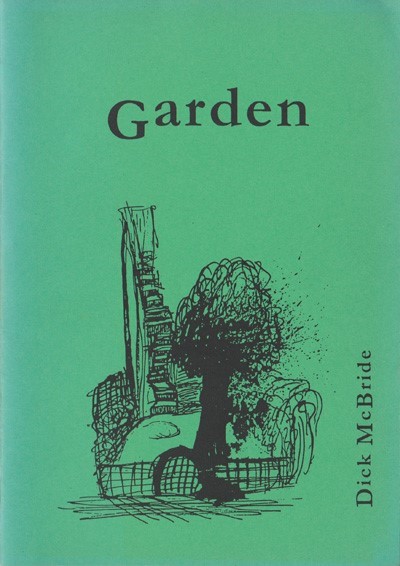
Following the publication of Garden, Annihilator Press had planned to publish Composed While Walking the Dog, a chapbook of Dick's fifty-word stories, but this never came to fruition.
2000s
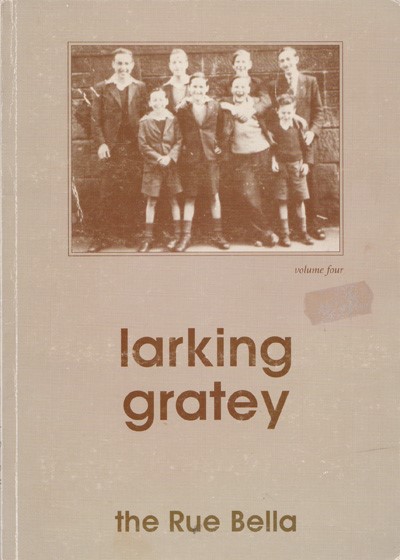
In 2000, Stardust, Kiss, Moth, and When Summer (four prose poems) and from Apocrypha (a short story) were published in the fourth volume of the Rue Bella. The Rue Bella was published by Nigel & Geoff Bird between 1998 and 2003 and featured work by Michael Horovitz, Brian Patten, Ruth Padel and Benjamin Zephaniah, among others. It also provided a platform for the up-and-coming writers of the period, including author and journalist Benjamin Myers.
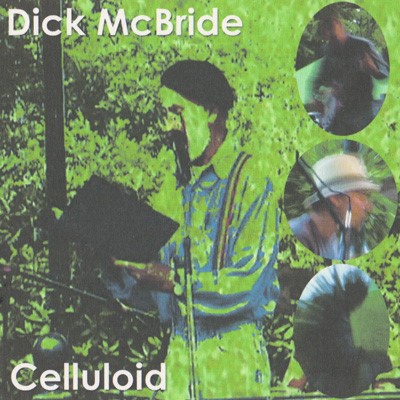
Between 2000 and 2001, Dick collaborated with Celluloid (Matthew Devenish and Ian 'Eezer' Jenkins) and turntablist Usama Dafaalla on The Last Beat, a live and recorded performance project.
Dick and Celluloid first performed together at Café Subterranea in 1998. They reunited for Oxfam Alive, an Oxfam benefit concert held in Priory Park, Great Malvern, on 8 July 2000, to support relief efforts for the drought crisis in Ethiopia. The group booked a rehearsal studio for one day and wrote around two hours of improvised material. Five tracks, Vacancy, Morning Sun, Ballad of Wheat, Spiders and Metronome, were recorded at their home studio and subsequently released as Dick McBride with Celluloid.
In December, priapus, a short story about Guy de Maupassant, was published in the fourth and final issue of Tim Gaze's rrat: Irrationalist Writing magazine. The fourth issue also featured priapus (reprise), an abridged version of priapus that was just under fifty words in length.
On 26 March 2001, When Summer Comes (later retitled Morning Sun) from Dick McBride with Celluloid was the opening track on BBC Radio 3’s Late Junction. A UK tour followed, including a headline slot at the Leeds Voice Festival of New Writing, a 10-day festival of live literature, and a performance in Centenary Square, Birmingham, as part of the line-up of ArtsFest.
Depression Waitress Blues, an excerpt from Flop (his unpublished novel about the McBride family during the Great Depression that morphs into a story about John Dillinger), was published in As High As The Bullet Holes, the sixth volume of the Rue Bella.
On 22 September, Dick and Celluloid participated in an event held at several venues in Great Malvern as part of a highly publicised international campaign to release Ngawang Choephel, a Tibetan ethnomusicologist and documentary filmmaker who was detained by the Chinese authorities in 1995.
Dick had been deeply affected by the events of 9/11. One of the organisers called to reassure him that there was no pressure to go ahead with the performances. They said they would understand if he wanted to withdraw, but he felt it was important to do what he could to help draw attention to the plight of Choephel, especially as the world's attention was on America.
He gave a poetry reading in the courtyard of Frogs Café, where other performers included cellist Julia Palmer-Price and Flatworld. A second reading took place outside the Amnesty Bookshop in Edith Walk, accompanied by Celluloid, who improvised on drums and double bass.

Ngawang Choephel was released on medical grounds in 2002 after serving six-and-a-half years of his 18-year sentence. Following his release from prison, he resumed work on his documentary, Tibet in Song.
Towards the end of the year, Dick's essay The Beat Goes On was published in the twenty-ninth issue of The Idler, a long-running magazine founded by Tom Hodgkinson and Gavin Pretor-Pinney in the early 1990s. The essay chronicles the events that led to his employment at City Lights.
In 2004, his fourth collection of poetry, Remembered America, was published by Rue Bella, who described the book as: …an uplifting reminder of the transcendent thrill of Beat poetry, mixed with a maturity hard earned by McBride in his long and colourful life.
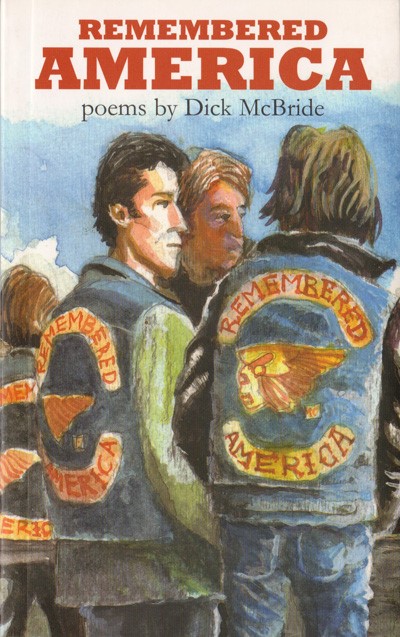
Essentially two collections in one book, Remembered America is divided into two parts: One Morning in Paradise and Approaching the Year 2012. It is dedicated to his good friend and fellow writer Patricia Gerrard, with whom he shared his life with at the foot of the Malvern Hills in Colwall, Herefordshire.
In an interview with the Malvern Gazette, Dick said that the contrast between the paradise feeling he gets when on the hills and in Colwall, with terrorism since the September 11 attack was a theme of the book.
The writer and poet, Philip Callow, wrote:
I have long admired his energy and his stubbornly hopeful vision against all the odds...I am especially taken with
Grass, its haunting refrain running through what is both an elegy and a rhapsody. In general I am gladdened by writing that can be wild like Ginsberg and is never far from ecstasy.
Looking back, Nigel Bird (editor of Rue Bella) recalled:
Remembered America was our last hurrah. Dick McBride had done the rounds. He'd worked in City Lights and been at the hub of the Beat poetry movement from its birth.
Like the Rue Bella itself, he wasn't one of the biggest fish, but he did have teeth and heart. As much as it was our final effort, it was also destined to be his. I think he had a desperate urge to publish one more grand work and we were the people who were able to grant him that.
In March, Dick gave a reading at The Chase, a secondary school in Malvern. The reading was organised by Mike Woods, the school's Head of English.
Later in the year, he celebrated the publication of Remembered America with an intimate reading in the Octagon Bar above St Ann's Well Café on the Malvern Hills. The event also featured an exhibition of visual poetry by James Strawbridge.
In 2005, Behan & the Beats was published by K.M. Dersley's Appliance Books as part of the Ragged EDGE magsheets series. The series featured Beat or neo-Beat flavoured
articles, stories, or memoirs of around 1,000 words, which were printed on one folded sheet of paper.
Other contributors to the series included A.D Winans, K.M. Dersley, Jim Burns, Gerald Locklin, Gerald Nicosia, Joan Jobe Smith, David Tipton, Zachary Kopp, Doug Draime, James Quinton, Ian Seed, John Jacob, Rupert Mallin, John Row and Bryn Fortey.
In August 2006, he headlined the Words In Motion stage at the Big Chill Festival in Herefordshire. As well as reading a selection of his poetry, Dick talked to MC Michael Barnes-Wynters about his early days in San Francisco, the Bread and Wine Mission, his sojourn at Better Books, and McBride Brothers & Broadley. The reading was recorded by his son Sean and distributed among friends and family.
In 2008, Charlie Stewart recorded and produced UpBeat and Groovy: Dick McBride Reads Poems 1960 - 2008. Recorded at his cottage in Herefordshire, UpBeat & Groovy is an anthology of poetry that Dick most often chose for his public readings. The poems draw inspiration from the joy of city life in San Francisco in the 50s & 60s, the tranquillity of the Malvern Hills, and the darker themes of mortality and terrorism.

On 9 May, he headlined the Malvern Fringe Festival Poetry Night. The event also featured Linda Hart, Dymock Poets expert, reading works by Robert Frost, as well as slam poet Lizzie Mac, Tom Vipond and Jai Hill.
A few months later, Dick and professional flautist Nicola Shorland presented an evening of unforgettable poetry and haunting magical flute playing
at the Colwall Festival. The concert, Images and Colours in Poetry and Music, took place on 18 July.
On 21 January 2009, Dick headlined The British Beat poetry reading, part of the Jack Kerouac: Back On The Road exhibition at the Barber Institute of Fine Arts, Birmingham. Curated by Professor Dick Ellis, head of the Department of American and Canadian Studies at the University of Birmingham, together with Dr Simon Warner, the event also featured readings by Jim Burns, Ian McMillan, David Tipton & Camelia Elias. At the end of Dick's reading, Jim Burns paid tribute to his life and work, prompting a standing ovation.
Later that year, Deathman appeared in Beatitude: Golden Anniversary 1959-2009, published by Latif Harris and edited by Harris and Neeli Cherkovski. This anthology of Beat and San Francisco Renaissance poets included a reprint of Beatitude Anthology (City Lights Books, 1960).
On 1 October 2010, James Strawbridge introduced a selection of recordings from UpBeat & Groovy: Dick McBride Reads Poems 1960 - 2008 on Listen with Marj, an hour-long poetry radio show hosted by Marj James and broadcast on Radio St Austell Bay, a non-profit community radio station based in the St Austell Bay area of Cornwall.
In 2011, Dick self-published a second edition of Cometh with Clouds (Memory: Allen Ginsberg).
In September, Kiss and Stardust were published in where the wild things were: the best of The Rue Bella (1998 - 2003) (Sea Minor, 2011), an anthology of poetry from The Rue Bella.
Dick McBride died peacefully at his home in Colwall, Herefordshire, on Tuesday 28 August 2012.
Notes
This biographical sketch is a work in progress and updated regularly. It is pieced together from conversations with Dick between 2000 and 2012, and supplemented with my own research.
If you've found this content useful and would like to support this project, you can do so via buymeacoffee.com/robmcdowall.
Your support will help cover the cost of research services and subscriptions, including reproduction fees and access to historical newspaper archives.
If you have any information or questions regarding Dick’s life and work, or have spotted any errors or dead links, please feel free to contact me at:
the astonished i at gmail dot com
Rob McDowall
Acknowledgements
My thanks and appreciation to Sean McBride, Peter Hale (Allen Ginsberg Estate), Stacey Lewis (City Lights Booksellers & Publishers), Malcolm Whyte (Troubador Press / Word Play Publications), Barry Miles, Kevin Ring (Beat Scene / Beat Scene Press), Jerry Cimino (The Beat Museum / Counterculture Museum), Tim Gaze (Annihilator Press / 3rd Millennium Literature), Nicole Savage (S.F.Heart / Beatitude Poetry), John Bugg (Fordham University), The Bancroft Library (UC Berkeley), The Lilly Library (Indiana University Bloomington), Special Collections at the University of Arizona Libraries, Chase Lovellette (Emory Center for Digital Scholarship), Matthew Devenish (Celluloid / Mu-Mu Audio), John Redman, Dave Jennings, Vo Fletcher, Andy Garbi, Leon Charles Morgan, Philip Smith (Philip Smith Books, Berkeley CA) and Thomas Haker (Wissenschaftliches Antiquariat Thomas Haker e.K.) for their time and help.
Bibliography
- 15 student marchers protest bomb policy (7 August 1959) The San Francisco Examiner.
- 2 operas set by workshop (9 May 1955). The San Francisco Examiner.
- A bank employee 'relaxes' by singing nightly operatic roles (13 May 1955). The San Francisco Call Bulletin.
- Allen Ginsberg at Cheltenham 1993 (27 May 2017). The Allen Ginsberg Project.
- Allen Ginsberg in London 1965 (15 October 2016). The Allen Ginsberg Project.
- Bands line up for Oxfam Alive event (4 July 2000). Worcester News.
- Bartlett, Amanda (14 February 2023). How San Francisco tried, and failed, to ban a 6-page book about love and sex. SFGate.
- Beat is on (21 March 1997). Berrow's Worcester Journal.
- Belen, Terry Mulert (23 October 2022). Farewell to Pierre. Ortenstone DeLattre Fine Art.
- Bellamy, Bruce, E. (1980). Private Presses & Publishing in England Since 1945. K.G. Saur.
- Bierend, Doug (9 January 2014). Throwback Thursday: The Glowing Dawn of the Atomic Age, Seen From 1950s Los Angeles. Wired.
- The Big Chill music festival will keep you cool in the hot weather (2 August 2006). Worcester News.
- Bills-Geddes, G. (29 February 2008). Grand Old Man of the Beat Generation. Malvern Gazette.
- Bird, Nigel (18 April 2010). The Rue Bella Magazine (1998 - 2003). Sea Minor.
- ——— (17 September 2011). WHERE THE WILD THINGS WERE – the bird brothers are back. Sea Minor.
- ——— (20 July 2020). Remembered America. Sea Minor.
- The Book Club of California (Summer 1960). Quarterly News Letter. Volume 25. Summer 1960. No. 3 The Book Club of California.
- Brake, Laurel (ed.) (1988). The Year's Work In English Studies. Volume 66. 1985 (London: John Murray).
- Brauns to present reviews of honor plays at Dramatists' Assembly to be held in P.A. (28 July 1954). Daily Palo Alto Times.
- Brazil, Eric (1 March 1998). Jack Micheline, poet, painter, free spirit. SFGate.
- Burns, Jim (August 2020). Bill Butler and The Unicorn Bookshop by Terry Adams Reviewed by Jim Burns. The Northern Review of Books.
- Caen, Herb (8 January 1959). One Man's San Francisco. San Francsco Chronicle.
- Campus scholarship and activities leaders cited in honors program (24 May 1957). The Hastings Daily Tribune.
- Cherkovski, Neeli (1979). Ferlinghetti: A Biography. New York: Doubleday.
- Children's & Illustrated Books, Antique Fans, Toys & Ceramics, Modern First Editions (18 December 2014). Dominic Winter Specialist Auctioneers & Valuers. Jamm Design.
- CHINA: Release of Tibetan prisoner of conscience welcome but authorities must do more (22 January 2002). Amnesty International UK.
- China (Tibet): Medical letter writing action: Ngawang Choephel (14 February 2000). Amnesty International.
- Church plans camping for young adults (25 August 1962). The Times. San Mateo, California.
- City Lights and Something Else (9 December 1967). The Bookseller. J. Whitaker.
- Clay, Steve (2016). from A Secret Location. Granary Books.
- Colwall (July 3, 2008). Hereford Times.
- Cone, Theresa, Loeb (26 May 1952). Little Theaters at Season Climax. Oakland Tribune.
- Cook, Ralph, T. (1982). The City Lights Pocket Poets Series: A Descriptive Bibliography. La Jolla, Calif. : L. McGilvery/Atticus Books.
- Corso, Gregory, Ferlinghetti, Lawrence & Ginsberg, Allen (1970). Penguin Modern Poets 5: Gregory Corso, Lawrence Ferlinghetti, Allen Ginsberg. Penguin Books.
- CRIME: Even with the World (10 February 1958). Time. New York: Time Inc.
- The Daily Telegraph Cheltenham Festival of Literature: Dirk at the cutting-edge of the put down (15 October 1993). The Daily Telegraph
- Damon, Gene (1966). Reader at Large. Tangents. vol. 1, no.5 Feb. 1966. Hollywood: One.
- Delattre, Pierre (1993). Episodes. Graywolf Press.
- Delay causes festival jitters (14 October 1993). The Gloucestershire Echo.
- Dery, Mark (5 September 2015). Lawrence Ferlinghetti and the Romance of City Lights. Daily Beast.
- Dick McBride on Allen Ginsberg (3 March 2022). The Allen Ginsberg Project.
- Dick McBride play on Telegraph Hill (10 February 1960). San Francisco Chronicle.
- Dossey, Steve & Wood, Donna (1982). An Interview with Pierre DeLattre. Beat Angels: Volume 12 of The Unspeakable Visions of The Individual. Arthur and Kit Knight.
- Emslie, Anne (24 November 2000). Owl House sculptor dies. Mail & Guardian.
- Enck, Denise (27 March 2011). Book Review – Beatitude Golden Anniversary: 1959-2009. Empty Mirror.
- Etheridge, James M, Kopala, Barbara & Riley, Carolyn (eds.) (1968). Contemporary Authors: A Bio-Bibliographical Guide to Current Authors and Their Works. Volumes 19-20. Detroit: Gale Research Company.
- Ferlinghetti, Lawrence (ed.) (1963). City Lights Journal Number One. San Francisco: City Lights Books.
- Ferlinghetti, Lawrence & Ginsberg, Allen (2015). I Greet You at the Beginning of a Great Career: The Selected Correspondence of Lawrence Ferlinghetti and Allen Ginsberg, 1955-1997. San Francisco: City Lights Books.
- Ferlinghetti, Lawrence & Morgan, Bill (2003). The Beat Generation in San Francisco: A Literary Tour. San Francisco: City Lights Books.
- Ferlinghetti, Lawrence & Peters, Nancy J. (1980). Literary San Francisco: A Pictorial History from Its Beginnings to the Present Day. San Francisco: City Lights Books and Harper & Row.
- Former rebel has remained true to the cause of poetry (21 May, 1999). Malvern Gazette.
- French, Warren (8 January 1967). But Must Alan Swallow's Dream Die Also? The Kansas City Star.
- French, Warren G. (1991). The San Francisco Poetry Renaissance, 1955-1960. Twayne.
- From San Francisco to St. Ann's Well (8 August 2004). BBC - Hereford and Worcester.
- Fugard's work is head's choice (24 August 1990). Malvern Gazette.
- Geiger, Henry (ed.) (1953). Frontiers. MANAS. vol. 6, no. 36, September 9, 1953. (PDF) Henry Geiger.
- Gifford, Barry & Lee, Lawrence (1999). Jack's Book: An Oral Biography of Jack Kerouac Rebel Inc.
- Gig set to bring town alive (7 July 2000). Malvern Gazette.
- Girodias, Maurice (ed.) (January 1962). Olympia Number One. Paris: Olympia Press.
- Golden ray of theatre (7 September 1989). Black Country Evening Mail.
- Gorn, Lester (28 May 1961). A Diagnosis of the Pulse Beat of The North Beach Scene. The San Francisco Examiner.
- Hale, Robert (22 April 2008). Fringe Welcomes Feast of Entertainment. Malvern Gazette.
- Hansey, Lida (1 September 1989). This Actor is Well Up to Big Demand! Malvern Gazette.
- Harris, Brayton (2018). A Different Beat: A Fragment of My World Voyage. CreateSpace Independent Publishing Platform.
- Harris, Mark (18 December 1966). Speaking of Books: Alan Swallow, 1915-1966. The New York Times.
- Heneghan, Donald, A. (2005). City Lights Pocket Poets Series 1955-2005: From the Collection of Donald A. Heneghan. The Groiler Club.
- Here's a drama group which assists playwrights (7 June 1953). San Francisco Chronicle.
- Hitchcock, George (21 October 1956). 'The Counterfeit Rose' — A Playright's Preview. San Francisco Chronicle.
- Hogan, William (6 November 1960). Between the Lines. San Francisco Chronicle.
- ——— (1 April 1965). Performances by Emerging Talents. San Francisco Chronicle.
- Hoppe, Arthur (7 August 1959). Young 'Peace Marchers' Reach City. San Francisco Chronicle.
- Hornick, Lita (ed.) (1964). Kulchur 14. Kulchur Press.
- Jack Kerouac: Back On The Road (27 November 2008). The Barber Institute of Fine Arts.
- Jones, David (Fall 2023). Ups and Downs at Poet's Corner. The Semaphore. Issue 243. Fall 2023.
- Kamiya, Gary (15 March 2015). Police Officer William Bigarani came down hard on beatniks. San Francisco Chronicle.
- ——— (20 March 2015). Beatniks’ battle with S.F. police goes national with poems. San Francisco Chronicle.
- Kamstra, Jerry (1976). The Frisco Kid. New York: Bantam Books.
- Kherdian, David (1995). Beat Voices: An Anthology of Beat Poetry. Henry Holt.
- Kinsman, Clare D. (ed.) (1979). Contemporary Authors: A Bio-Bibliographical Guide to Current Authors and Their Works. Volumes 17-20. First Revision. Detroit: Gale Research Company.
- Kirch, Clare (13 September 2013). Ohio University Press Rebrands Trade Imprint. Publishers Weekly.
- Koch, Rudolf (1955). The Book of Signs Which Contains All Manner of Symbols Used from the Earliest Times to the Middle Ages by Primitive Peoples and Early Christians. New York: Dover Publications.
- Kunkin, Art (ed.) (1967). Love Book 'Obscene' in San Fran. Los Angeles Free Press. vol. 4, no. 22 Issue no. 150 June 2 - 9 1967. Los Angeles: Art Kunkin.
- Lafferty, Jo (5 March 2004). Dick McBride in Review: The Chase. Worcester News.
- Landesman, Jay (2 September 1978). A Site for Small Presses. The Bookseller. J. Whitaker.
- Literature (23 November 1995). The Independent.
- Little theater group faces busy summer, from bay to river (29 June 1952). Oakland Tribune.
- Mallin, Rupert (23 January 2015). Poet Keith Dersley 2015. Rupert Mallin.
- Marchers mark Hiroshima Day (6 August 1959) The San Francisco News.
- Mathes, William (23 October 1966). A Skillful 'First' Among the New Novels. San Francisco Chronicle.
- ——— (14 May 1967). A Tribute to the Late Publisher Alan Swallow. San Francisco Chronicle.
- May, John (20 May 2012). Bill Butler & the Unicorn Bookshop + Better Books. The Generalist.
- Mercereau, Stuart (22 July 1952). S.F. Author Is Promising. The San Francisco News.
- ——— (15 August 1953). New McBride Play is Promising, But—. The San Francisco News.
- McBride, Dick (20 May 1974). Original Watergate. The Newsletter (On the State of the Culture). New York: Newsletter on the State of the Culture.
- ——— (1982). Cometh With Clouds (Memory: Allen Ginsberg). Cherry Valley Editions.
- ——— (13 February 1994). Letters: Word pictures. The Independent.
- ——— (1995). The Astonished I. Colwall: McBride's Books.
- ——— (1995). Whizzkiddery. The Three Rope Trick: Panurge New Fiction 22. Panurge Publishing.
- ——— (1996). Dick McBride THE ASTONISHED I. Café Royal: Panurge New Fiction. Panurge Publishing.
- ——— (9 April 1997). Shuffly Scruffy Rebel. The Guardian.
- ——— (1997). Hurry, Armageddon. Main Street Journal: Poetry, Fiction, Music, Essays. Issue Three. The Main Objective.
- ——— (1997). Jacqui (Love Poems). Colwall: McBride's Books.
- ——— (1999). The Garden. Adelaide: Annihilator Press.
- ——— (2001). Allen Ginsberg & The Blue Rinse Brigade. Urthona.
- ——— (6 April 2001). Letters. The Guardian.
- ——— (2001). The Beat Goes On. Hodgkinson, T. (ed.) The Idler.
- ——— (2006). Live at the Big Chill Festival (Ltd CD-R). Sean McBride.
- McBride, Richard (1960). Oranges. San Francisco: Bread & Wine Press.
- ——— Ballads of Blood. San Francisco: Golden Mountain Press.
- ——— Lonely The Autumn Bird; Two Novels. A Swallow Paperbook.
- ——— (10 July 1964). Days Are Sun. The Spectator.
- ——— (1966). Memoirs Of A Natural-Born Expatriate. Alan Swallow.
- McBride, Robert (27 January 1968). We Are Hoping To Make The Scene Here. The Bookseller. J. Whitaker.
- McClure, Michael, Ferlinghetti, Lawrence & Meltzer, David (eds.) (1961) Journal for the Protection of All Beings: A Visionary & Revolutionary Review. San Francisco: City Lights Books.
- McHugh, Vincent (31 July 1960). Virgin Islanders and Beatnik Founders Are Not Included. San Francisco Chronicle.
- ——— (16 April 1961). Frantic Nights With Mimeograph Stapler and Wine Jug. San Francisco Chronicle.
- Meltzer, David & Shoemaker, Jack (2001). San Francisco Beat: Talking with the Poets. San Francisco: City Lights Books.
- Miles, Barry (1989). Ginsberg: A Biography. London: Viking Penguin.
- ——— (2002). In the Sixties. London: Jonathan Cape.
- ——— (2010). London Calling: A Countercultural History of London Since 1945. London: Atlantic Books.
- Miller, Roy (9 October 1960). The Little Magazines --- High In Purpose, Low In Circulation. San Francisco Chronicle.
- Mills, W.E. (1990). Temple of the Winds. Upton-upon-Severn: The Self Publishing Association Ltd.
- 'Miracle' play in modern dress (11 August 1953). The San Francisco Call Bulletin.
- Monroe, Harriet (ed.) (1961). Poetry: October 1961 - Volume 99 - Number One. Modern Poetry Association.
- Montag, Tom (ed.) (1974). Margins: A review of little magazines and small press books. No. 11, May 1974. Tom Montag.
- Moréteau, Constance and Pleasance, Simon (Translator) (May 2019). Living and Rebellious Bodies: Publications as Seen by Artists in the 1960s and 1970s. Critique d'art 52 Spring/Summer. Open Edition Journals.
- Morgan, Bill (1982). Lawrence Ferlinghetti A Comprehensive Bibliography to 1980. Garland Publishing.
- Music festival will boost Oxfam's work (13 June 2000). Worcester News.
- Nelson, W. Dale (2010). The Imprint of Alan Swallow: Quality Publishing in the West. Syracuse University Press.
- 'New Voices' winners announced (29 May 1957). The Collegian. Hastings. NE: Hastings College.
- Nichols, Luther (15 July 1952). Theater San Francisco: Promising Excercise By a Young Dramatist. San Francisco Chronicle.
- ——— (17 May 1960). Auden's 'Homage to Clio'. The San Francisco Examiner.
- Nicosia, Gerald (1986). Memory Babe: A Critical Biography of Jack Kerouac. Penguin Books.
- Nine bands and a Beat Poet (30 June 2000). Worcester News.
- Noble, Eric (December 2016). Another Four-Letter Word: The 1966 Love Book Raids and Subsequent Events. (PDF) The Digger Archives.
- Nuttal, Jeff (1968). Bomb Culture. MacGibbon & Kee Ltd.
- Opera workshop events set (16 May 1955). The San Francisco Examiner.
- Original play offered in SF (6 August 1953). The Berkeley Gazette.
- Poet's latest work can be enjoyed at reading (27 February 2004). Worcester News.
- Pacifica Foundation (November 1960). KPFA Folio. Volume 11. No. 16. Berkeley: KPFA.
- ——— (February 1964). KPFA Folio. Volume 14. No. 23. Berkeley: KPFA.
- Pacifica Tape Library (1971). Pacifica Programs 1971 Catalog. Berkeley: Pacifica Tape Library.
- Pierre DeLattre (24 October 2022). Taos News.
- The Players Magazine (1959). The Players Magazine. Volumes 36 - 37. National Collegiate Players.
- Playwright to repeat course; here and SF (8 January 1953). The Berkeley Gazette.
- The poetic Malverns (2 October 1996). Worcester News.
- Poet on the spot (4 December 1998). Berrow's Worcester Journal.
- Play cast (contd) (19 October 1949). Daily Eastern News. Eastern Illinois University.
- Players to present another production tomorrow, Friday (15 March 1950). Daily Eastern News. Eastern Illinois University.
- Poetry and Censorship: November 23, 1966. Poetry Center Digital Archive:. San Francisco State University.
- 'Pond' opens season (1 September 1989). Berrow's Worcester Journal.
- Powerful drama (14 September 1990). Malvern Gazette.
- Pratt, G.E. (16 November 1949). 'Player's' 'Arsenic and Old Lace' As I saw it Friday Night. Daily Eastern News. Eastern Illinois University.
- Prevért, Jacques and Ferlinghetti, Lawrence (Translator) (1958). Selections from Paroles. San Francisco: City Lights Books.
- Professionals put to shame (8 September 1989). Malvern Gazette.
- Pulley, Michael (18 October 2001). The last days of Victor Wong. Sacramento News and Review.
- Radcliffe, Charles and Rosemont, Franklin (eds.) (2005). Dancin' in the Streets! Anarchists, IWWs Surrealists, Situationists & Provos in the 1960s as Recorded in the Pages of The Rebel Worker & Heatwave. Chicago: Charle H. Kerr.
- Ralph, George W. (1981). The Book of Jonah as a Source for Drama in the English-speaking Theater. Michigan: Michigan State University. Department of Theatre.
- Rasheed, Tarik A. (18 September 2012). 'He was a great guy' - Tributes to Beat Poet Dick. Ledbury Reporter.
- Ravnikar, Michelle Barret (1986). Reporting a Mass Murder: Coverage of the Charles Starkweather Case by the "Lincoln Star" and the "Omaha World Herald." The University of Montana.
- Raymond Danowski Poetry Library: Digital Danowski (2016). Networking the New American Poetry. Emory University.
- Reading from new work (3 September 2004). Malvern Gazette.
- Readings by Bay Area Poets (16 October 1961). The San Francisco Examiner.
- Reinhart, James Melvin (1960). The Murderous Trail of Charles Starkweather. Springfield, Illinois: Charles C. Thomas.
- Religion: Far-Out Mission (29 June 1959). Time. New York: Time Inc.
- Reynolds, Richard (3 October 2011). Shig Murao: The Enigmatic Soul of City Lights And The San Francisco Beat Scene.
- ——— (3 October 2011). Shig Murao: The Enigmatic Soul of City Lights And The San Francisco Beat Scene. ZYZZYVA.
- Richards, Janet (1979). Common Soldiers: A Self-Portrait and Other Portraits. San Francisco: The Archer Press.
- Rigney, Francis J. and Smith, Lemuel D. (1961). The Real Bohemia: A Sociological and Psychological Study of the "Beats." New York: Basic Books.
- Ring, Kevin (Autumn 2004). Review of Remembered America by Dick McBride. Beat Scene. No. 46. Autumn 2004. Beat Scene Press.
- ——— (Winter 2021). Review of Cometh with Clouds (Memory: Allen Ginsberg) by Dick McBride. Beat Scene. No. 102. Winter 2021. Beat Scene Press.
- ——— (Autumn 2023). Dick McBride's Dreams. Beat Scene. No. 108. Autumn 2023. Beat Scene Press.
- ——— (16 February 2024). More Beat Scene First Words. Beat Scene Press.
- ——— (Winter 2024). McBride Brothers & Broadley. Beat Scene. No. 109. Winter 2024. Beat Scene Press.
- Roberts, Coleman (April 2001). The Bread and Wine Mission: Spirituality, Poetry and Rebellion in North Beach. (PDF) Outside Lands Volume 17, No.2 Apr-Jun 2021. Western Neighbourhoods Project.
- Ron Muszalski (25 November 2022). The Peoples Pyramid.
- Rosemont, Franklin (2003). An Open Entrance To The Shut Palace Of Wrong Numbers. Surrealist Editions.
- Savage, N. (2007). Beatitude Magazine. Beatitude Poetry.
- Seaman, Duncan (29 December 1995). The Beat Goes On For a Sixties' Poet and Author. Malvern Gazette.
- Schevill, James (1953). High Sinners: Low Angels. Bernard Porter Books.
- Schmaltz, Romalyn (2019). Upper Grant Avenue Street Fair--An Oral History. FoundSF.
- Silesky, Barry (1990). Ferlinghetti: The Artist in His Time. New York: Warner Books.
- Sinclair, Ian (ed.) (2006). London: City of Disappearances. Hamish Hamilton.
- Smith, Larry R. (1983). Lawrence Ferlinghetti: Poet-at-Large. Carbondale. IL: Southern Illinois University Press.
- Solomon, Carl (March 1983). The Poetry Project Newsletter #97. (PDF) The Poetry Project.
- 'Sorry, Wrong Number' given tonight (29 March 1950). Daily Eastern News. Eastern Illinois University.
- Spain: The Midget & The Elephants (20 December 1954). Time. New York: Time Inc.
- Stanford University. Dramatists' Alliance (1953). Bulletin of the Dramatists' Alliance. Stanford: Dramatists' Alliance.
- ——— (1954). Bulletin of the Dramatists' Alliance: Competitions and Assembly. Stanford: Dramatists' Alliance.
- Student recital in little theater (10 May 1958). The Hastings Daily Tribune.
- Sutherland, Starr (25 September 2019). Nancy Peters Interview Rough Clips. vimeo.
- Swallow, Alan (1974). Publishing in the West: Alan Swallow: Some Letters and Commentaries. Santa Fe: Lightning Tree.
- Swoop, Dawn (Winter 1996). DICK McBRIDE The Astonished I (McBride's Books). Beat Scene. No. 24. Winter 1996. Beat Scene Press.
- Tennant, Emma, Bailey, Hilary & Elliott, David (2014). Did We Meet On Grub Street?: A Publishing Miscellany. Quartet.
- 'There and Where' read here (18 April 1958). The Collegian. Hastings. NE: Hastings College.
- Tibetan Musician Case Mark 40 Years of Human Rights (25 May 2001). Amnesty International UK.
- Town to host vigil to highlight the plight of imprisoned folk musician (12 September 2001). Worcester News.
- UC plans class in playwriting (17 September 1952). The Berkeley Gazette.
- US Beat Poet in date at Octagon (7 September 2004). Worcester News.
- Wabash College (1974). Iniana Authors and Their Books 1917-1966. Indiana: Wabash College.
- Wallace, Emily M. (1968). A Bibliography of William Carlos Williams. Wesleyan University Press.
- Walls, Jim (5 April 1959). The North Beach Renaissance As Expressed at City Lights. San Francsco Chronicle.
- Wegars, Don (27 May 1962). Bookmarks: Inside San Quentin by a Man Who Should Know. San Franciso Examiner.
- ——— (24 December 1961). An Intriguing Seminar of Bay Area Legal Beagles. The San Francisco Examiner.
- Whiting, Sam (24 August 2023). Jay Thelin, whose Psychedelic Shop set the stage for S.F. Summer of Love, dies at 84. San Francisco Chronicle.
- Whyte, Malcolm (Fall 2008). Making Howl Whole or How Troubador Press Restored the Dirty Words to an American Epic Poem. Quarterly News Letter. Volume 73. Fall 2008. No. 4 The Book Club of California.
- ——— (22 September 2022). Collecting and Sharing Edward Gorey’s Artwork Edward Gorey Charitable Trust.
- Williams, John (9 December 2002). Obituary of Mike Hart. The Guardian.
- Williamson, Marcus (10 March 1996). Kenneth Patchen Home Page.
- ——— (25 October 2012). Dick McBride: One of the Last of the Beat Poets. The Independent.
- Wills, John (17 February 2023). Doom Town, Nevada Test Site, and the Popular Imagination of Atomic Disaster. Journal of American Studies. Cambridge University Press.
- Writer, lecturer, editor on faculty (11 April 1958). The Collegian. Hastings. NE: Hastings College.